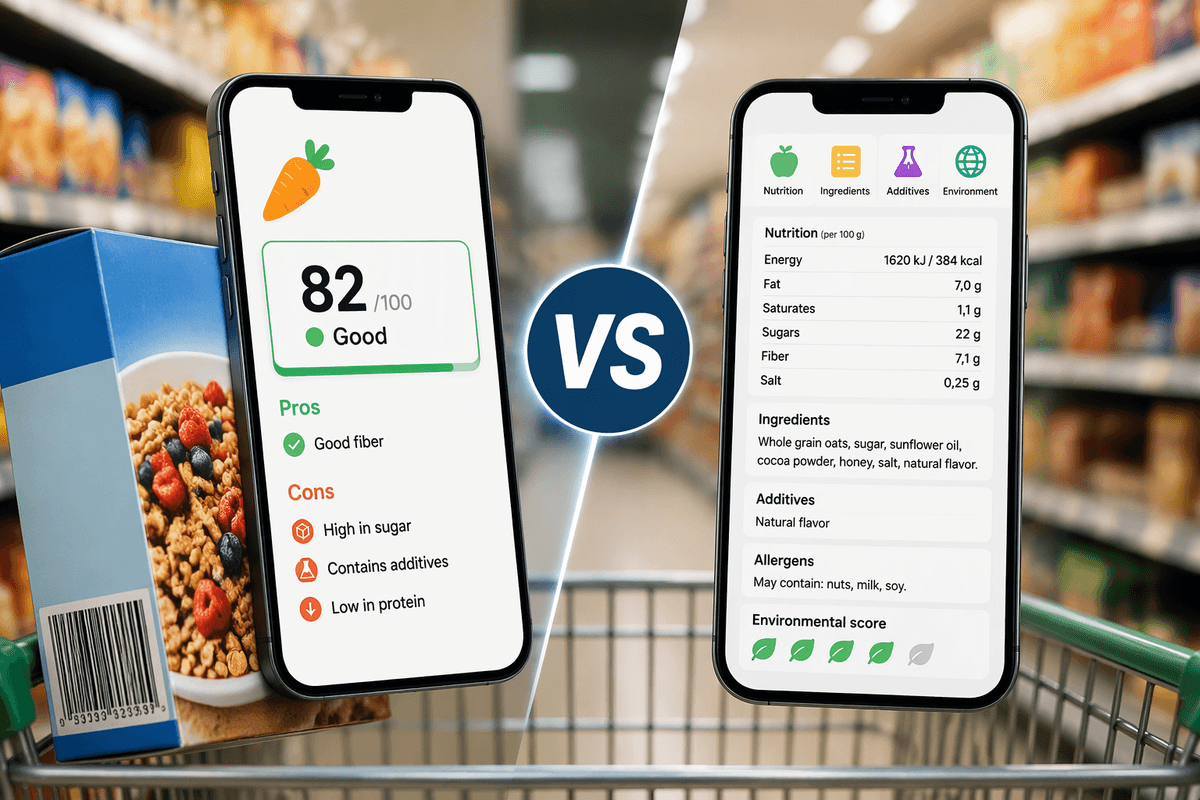
What Yuka Can—and Cannot—Tell You
When a product receives a high or low Yuka score, it is easy to treat that number as a final verdict. In practice, the score is a quick screening tool. It reflects factors such as selected ingredients, nutritional information, or concerns identified in the formula, helping you notice products worth comparing more closely. That can be useful when shelves are crowded and labels are difficult to read.
It cannot tell you whether a product is right for your body, diet, allergies, budget, or personal priorities. A lower score does not automatically make a product unsafe, just as a high score does not guarantee that it will work well for you. Product databases may also lack complete context, and formulas can change. Use the scan to ask better questions, then check the package, serving size, ingredients, and your own needs before deciding.
Start With the Scan, Not the Score

When you pick up a product, begin by scanning it before deciding what the score means. Treat the result as a prompt to inspect the label, not as a pass-or-fail judgment. Check whether the scanned item matches the exact size, flavor, scent, or formula in your hand. A product page may refer to an older package or a different variation, and that difference can affect the ingredients and rating.
Then look at the reasons behind the score. For food, compare the serving size, sugar, fiber, salt, protein, and degree of processing with similar products. For personal-care items, review the ingredients Yuka identifies and consider where they appear in the list and what the product is designed to do. A concern may matter more in a leave-on cream than in a product that is quickly rinsed away. This takes longer than glancing at a number, but usually only a minute or two. If the scan raises a question, use the package and your own priorities to decide whether the difference is meaningful.
Look Beyond Marketing Claims
Packaging often makes a product sound healthier than it is. Words such as “natural,” “clean,” “gentle,” “plant-based,” or “free from” may highlight one desirable feature while saying little about the formula as a whole. A cereal can be labeled “made with whole grains” and still contain substantial added sugar. A moisturizer can claim to be “fragrance-free” while including other ingredients that may not suit your skin.
Use these claims as clues, not conclusions. After scanning, turn the package around and check the ingredient list, nutrition panel, and product type. Compare the claim with what you actually want: less sugar, fewer irritants, a simpler formula, better fiber, or a specific allergen avoided. Yuka may flag certain ingredients, but it cannot always judge whether a marketing phrase is vague, carefully limited, or meaningful for your situation. Claims can also vary by country and may not reflect how much of an ingredient the product contains. The practical approach is to ask what the label is emphasizing—and what it leaves for you to investigate.
Understand Ingredients in Everyday Context
An ingredient can sound concerning in isolation and still play a limited role in the finished product. Preservatives, for example, help prevent spoilage, while acids, emulsifiers, and stabilizers can affect texture, taste, or shelf life. In personal care, the same ingredient may have a different practical meaning depending on whether it appears in a cleanser, rinse-out conditioner, or leave-on treatment. Consider the product’s purpose, how often you use it, and how long it stays in contact with your body.
Pay attention to your own response as well. If a shampoo repeatedly causes itching, or a snack worsens a known allergy, that experience matters more than a general rating. The ingredient list can help you look for patterns, but it may not reveal the concentration, manufacturing conditions, or every reason your body reacts. Yuka’s warnings are useful prompts for closer inspection, not diagnoses. When an ingredient matters to you, check the full label, follow advice from a qualified professional for allergies or medical concerns, and choose a simpler alternative if the price and performance are acceptable.
Compare Similar Products More Fairly
Once you understand what an ingredient may mean in context, compare products that serve the same purpose. A granola bar should be compared with other snack bars, not with plain oatmeal; a facial cleanser should be measured against similar cleansers, not a rich moisturizer. Matching the product type keeps the comparison useful because texture, shelf life, serving size, and intended use can affect both the formula and the score.
Look at the differences that matter most to you, then compare them side by side. One cereal may contain less sugar but also less fiber. One lotion may have a shorter ingredient list but feel too drying for regular use. A higher-scoring option may cost substantially more, come in a smaller package, or require replacing a product you already tolerate well. Check the price per ounce or serving rather than the shelf price alone. Yuka can help you identify alternatives, but its suggested replacement is not automatically the best choice. The fairest comparison balances the score with nutrition, ingredients, performance, quantity, cost, and your reason for shopping. That approach prevents small rating differences from outweighing practical benefits.
Build a Shopping Habit That Works

A useful shopping routine does not require scanning every item in the store. Start with products you buy often or have been meaning to replace, such as breakfast cereal, sunscreen, shampoo, or packaged snacks. Before shopping, decide which factor matters most for that trip: reducing added sugar, avoiding a known irritant, finding a simpler formula, or staying within a budget. Scan two or three comparable options, review the reasons behind the ratings, and choose the one that best fits that priority.
Save dependable choices so you do not have to repeat the same research every week, but check the package when you repurchase. Brands can change formulas, serving sizes, packaging, or suppliers, and a saved result may no longer match the item on the shelf. Keep a short list of acceptable alternatives rather than searching for one perfect product. This habit also makes trade-offs easier: you may accept a moderate score when the product is affordable, works well, and addresses your main concern. The goal is a repeatable decision process, not a longer shopping trip or a home filled with products chosen only for their ratings.
Make Better Choices Without Chasing Perfect Scores
A better choice is usually the one that improves the factor you care about without creating new problems elsewhere. If two similar products meet your needs, choose the one with the clearer ingredients, better nutrition, lower price, or fewer known triggers—not necessarily the one with the highest Yuka score. A moderate rating may be entirely reasonable when the product fits your diet, skin, routine, and budget.
Keep using Yuka as a shortcut for asking useful questions, then make the final decision from the full picture. Check the actual package, compare realistic alternatives, notice how your body responds, and accept that every option involves trade-offs. Shopping thoughtfully does not mean eliminating every questionable ingredient or researching every purchase. It means using the score as one piece of evidence and choosing consistently according to what matters most to you.