Turia Gardens: the park that replaces a river
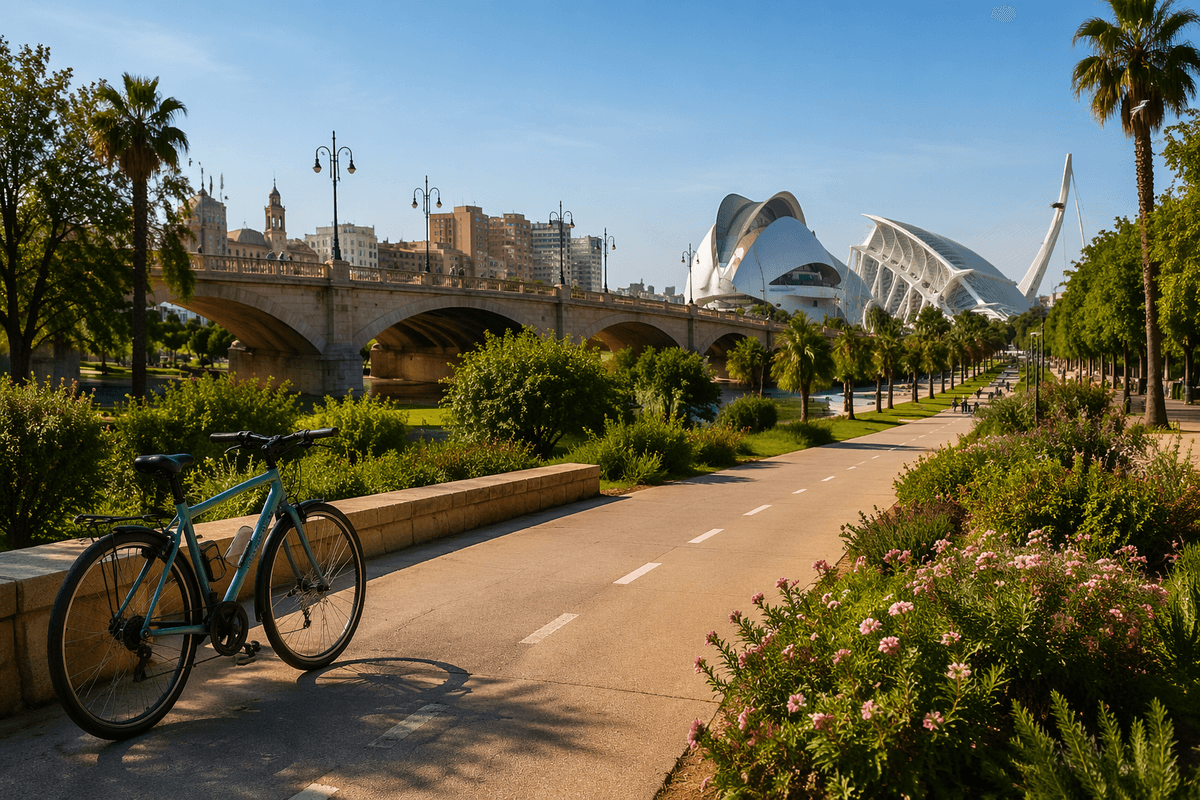
I hesitated to “just pop into” Turia Gardens from the Old Town, because on a map it looks like a simple green ribbon—and in real life it’s a long, sun-exposed corridor that can quietly eat half a day. The basic idea is brilliant: Valencia diverted the Turia River after a devastating flood, then turned the old riverbed into a linear park. What you feel on the ground is a sequence of mini-parks stitched together by bridges, with enough variety that it’s easy to keep drifting east without realizing how far you’ve gone.
If you’re here for 2–3 days and mostly walking, treat Turia as a chosen “spine,” not a scavenger hunt. The wins are the steady, mostly car-free paths, the shade in some stretches, and the way it connects neighborhoods without you navigating traffic. The friction is that the shade is inconsistent (midday can feel hotter than you expect), and the highlights aren’t all evenly spaced—some sections feel like pure transit. Mentally split it into chunks and pick a turnaround point before you start; it keeps the park relaxing rather than becoming an accidental endurance walk.
For your first pass, aim for a “sample, then commit” approach: enter from the Old Town edge, walk 20–30 minutes to settle into the rhythm, then decide whether you’re in a strolling mood or you should save the longer eastward stretch for your bike day. That single decision prevents the most common mistake here: doing the longest, least-efficient part on foot when your legs (and patience) would be happier elsewhere.
How to navigate: walking vs cycling, where to start
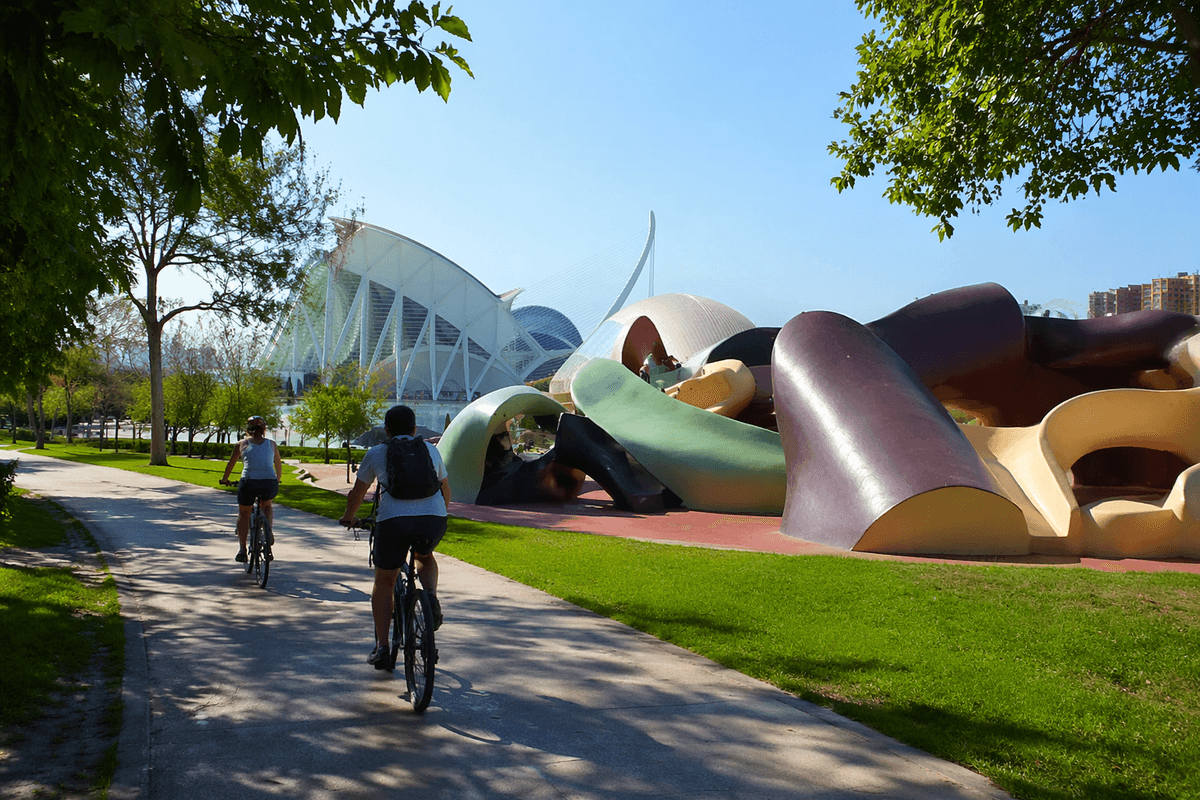
The first real decision is at the top of the ramp: do you want a “linger and look up at bridges” pace, or a “cover ground” day? On foot, Turia works best as a short out-and-back from the Old Town edge—enter near Pont de la Trinitat (easy from El Carmen) and give yourselves a firm turnaround time, because the path is so smooth you’ll keep saying “ten more minutes” until it’s suddenly lunch-and-siesta o’clock.
If it’s warm or you’re starting after 11 a.m., walking far east can feel like a slow bake in the less-shaded stretches; that’s where the bike day earns its keep. Rent bikes for the longer center-to-east run: start around Palau de la Música so you skip the less distinctive bits, then ride toward Gulliver Park and on to the City of Arts and Sciences—fast enough to connect the highlights, but still easy to stop when something grabs you.
One constraint to plan around: the park is linear, but your energy isn’t. Do the “pretty, close, flexible” section walking (bridges + central gardens), and save the “distance, spectacle, and fewer natural turnarounds” section for cycling, when backtracking doesn’t feel like a punishment.
West-to-center highlights: nature, sports, city views
The first time we aimed west from Pont de la Trinitat, it felt oddly empty for such a famous park—wide paths, fewer “headline” sights, and just enough sun to make you question your plan. That’s exactly why this stretch works best early (or on a cooler day): you get the quiet, nature-forward version of Turia before the central sections fill up, and you can decide how much distance you actually want without feeling like you’re missing the main event.
If you’re walking, drift west for 20–40 minutes and keep it simple: stay on the main riverbed path, detour only when something clearly improves your experience (shade, water, a viewpoint). The sports areas (fields, running tracks, courts) are lively and local, but they’re not “stop-worthy” unless you want a people-watch break—otherwise they can become time sinks because there’s no single focal point. If you’re on bikes, this section is where you can cover ground quickly, but it’s also the easiest place to accidentally ride past the best views: when you hit a bridge with a higher pedestrian span, take the minute to go up and look back along the green corridor; it’s one of the few ways the scale of the park really clicks.
As you roll back toward the center, let the bridges be your pacing tool: one good “lookout bridge” stop, one water-and-snack pause, then keep moving. It prevents the classic Turia problem—burning your best energy on the least distinctive kilometer and arriving to the central gardens already tired.
Center-to-east highlights: bridges, culture, City of Arts
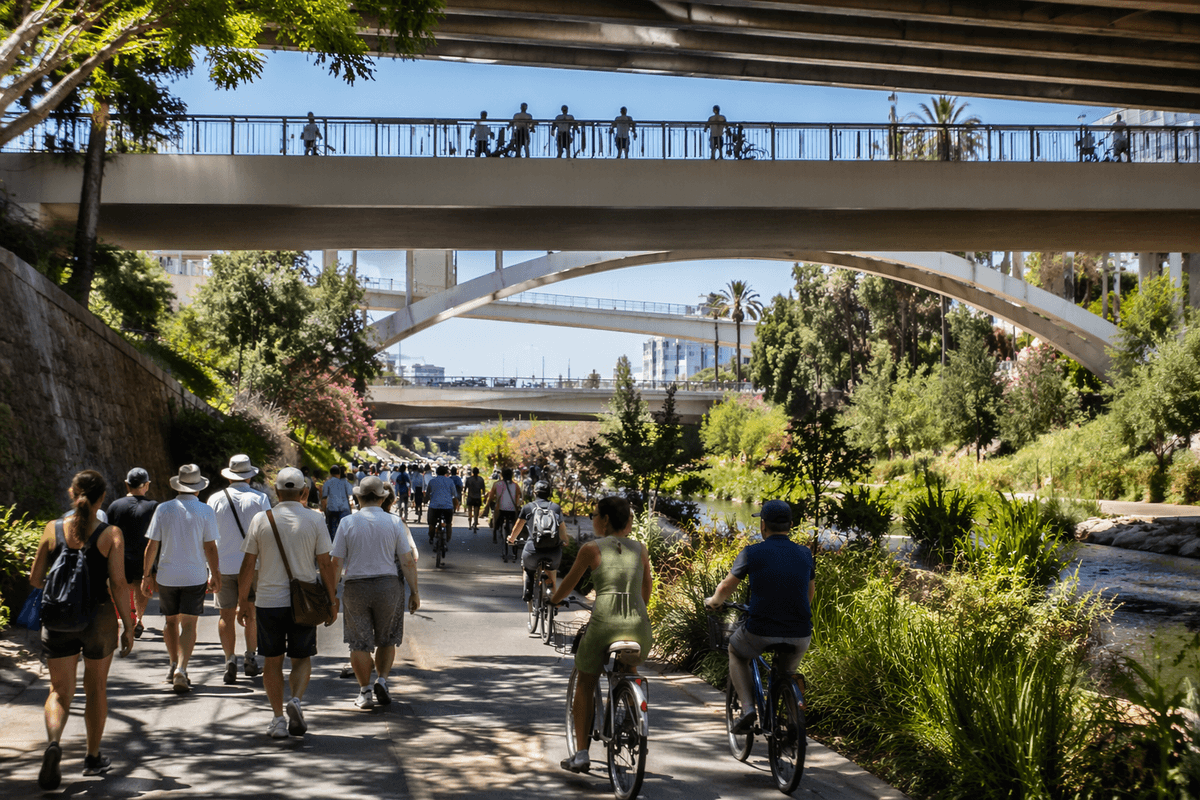
The moment the park starts feeling “busier” is usually your cue that you’ve crossed into the center-to-east run: more bridge traffic above you, more tour groups funneling toward the same photo angles, and fewer natural reasons to turn around. If you’re walking, this is where distance can quietly outpace enjoyment—so I’d pick one cultural stop or one big landmark, not both, unless you’ve started early and the heat is behaving.
Bridge-wise, it’s worth popping up for one of the more design-forward crossings (even a two-minute climb changes the whole perspective), but don’t make a habit of it—those up-and-downs add up and feel surprisingly annoying in the sun. As you edge east, the scenery shifts from “garden corridor” to “destination mode,” and you’ll notice it in the crowd flow: people stop abruptly, bike bells get more frequent, and the shared path feels narrower even when it isn’t.
The City of Arts and Sciences is the obvious endcap, and it earns the hype visually, but it’s also where timing matters most. Midday, the white surfaces bounce light and the open plazas can feel hotter than the riverbed; late afternoon is easier on your eyes and energy, but you’ll share it with everyone else. If you’re on bikes, lock them and commit to a tight loop—one slow lap for photos and a water break—because lingering here can eat the time you thought you’d spend wandering back toward the Old Town.
Making it yours: best breaks, detours, and when to stop
We hit that classic Turia moment—feet fine, brain tired—where every bench looks like a commitment. When that happens, I like “breaks with an exit”: pause near a bridge ramp or a clear park edge, so you can bail back to the Old Town without negotiating another long, straight stretch. Sitting deep in the riverbed is calmer, but it makes the return feel longer than it is, especially in midday heat.
Detours work best when they solve a problem you already have: shade, water, a bathroom, or a mood reset. If you’re feeling behind schedule, skip the extra bridge climbs; they’re great once, then they turn into friction. If you’re feeling fresh, take one playful stop (Gulliver is the obvious one) and treat everything else as “pass-through scenery.”
The clean stopping rule: turn around at the first point where you start checking the map twice. You’ll end the day happier with one “we could’ve gone farther” than with the slow realization that you now have to walk it all back.