The everyday turmeric myth meets real kitchen use
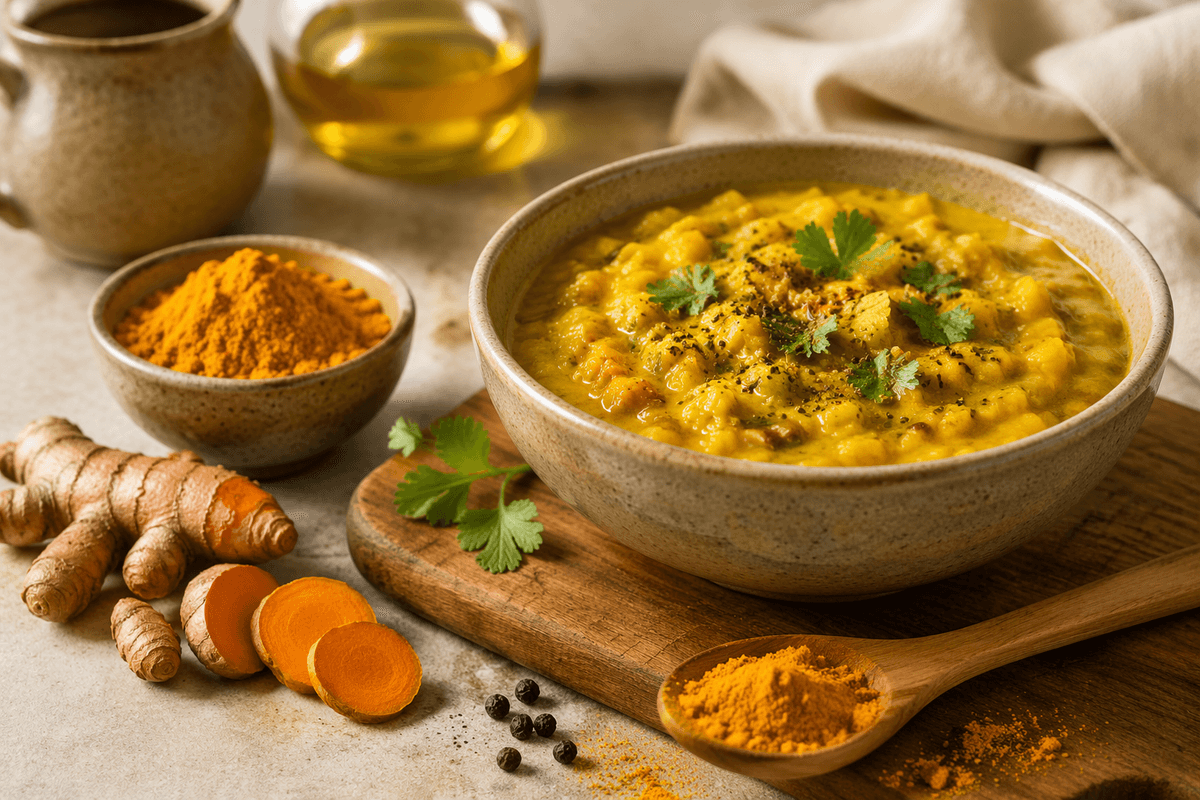
You notice it when the spoon hits the pot: turmeric looks bold, so it’s easy to assume it’s “doing a lot” in your body. A pinch turns rice bright, a half-teaspoon stains a smoothie yellow, and suddenly it can feel like you’ve made a meaningful anti-inflammatory choice—especially if you’ve seen the headlines or heard someone swear by it.
In real kitchen use, though, turmeric usually functions more like a steady background ingredient than a targeted dose. The amount you add for taste and color is small, and it’s spread across a whole pot of soup or multiple servings. That can create an inconsistency people misread: one day it feels harmless and routine, another day they “double it” because nothing felt different.
That’s where the pattern starts. Because turmeric’s most talked-about compounds don’t transfer into the body efficiently, some cooks unconsciously compensate—more in breakfast eggs, plus golden milk at night, plus a capsule “just in case.” The effort is subtle, but the total exposure can creep up fast, which matters more if your stomach runs sensitive or you’re also managing meds that don’t love surprises.
Why turmeric tastes warm, bitter, and earthy
The first clue is usually on your tongue: a gentle warmth that shows up before the rest of the dish fully registers, followed by a slightly drying bitterness. If you add a little more thinking it will taste “healthier,” that bitterness can jump out in a way that feels inconsistent—fine in a long-simmered soup, harsher in scrambled eggs or a smoothie.
That shift isn’t your imagination. Turmeric’s flavor comes from a mix of aromatic compounds and naturally bitter polyphenols, and they behave differently depending on the cooking setup. Heat and time can soften some of the sharp edges by spreading those compounds through fat and liquid, while quick, low-moisture cooking can leave the bitter notes more concentrated in each bite. In cold blends, the earthy aroma can read as “dirt-like” because the volatiles hit your nose all at once, without steam and browned flavors to round them out.
This is also why it’s easy to misjudge how much you’re using. Color rises fast even at small amounts, but the bitter compounds keep scaling as you add more, so the taste may be the first sign your “pinch” has quietly turned into a daily habit that takes effort for your stomach to tolerate.
Color, aroma, and the brain’s satiety cues
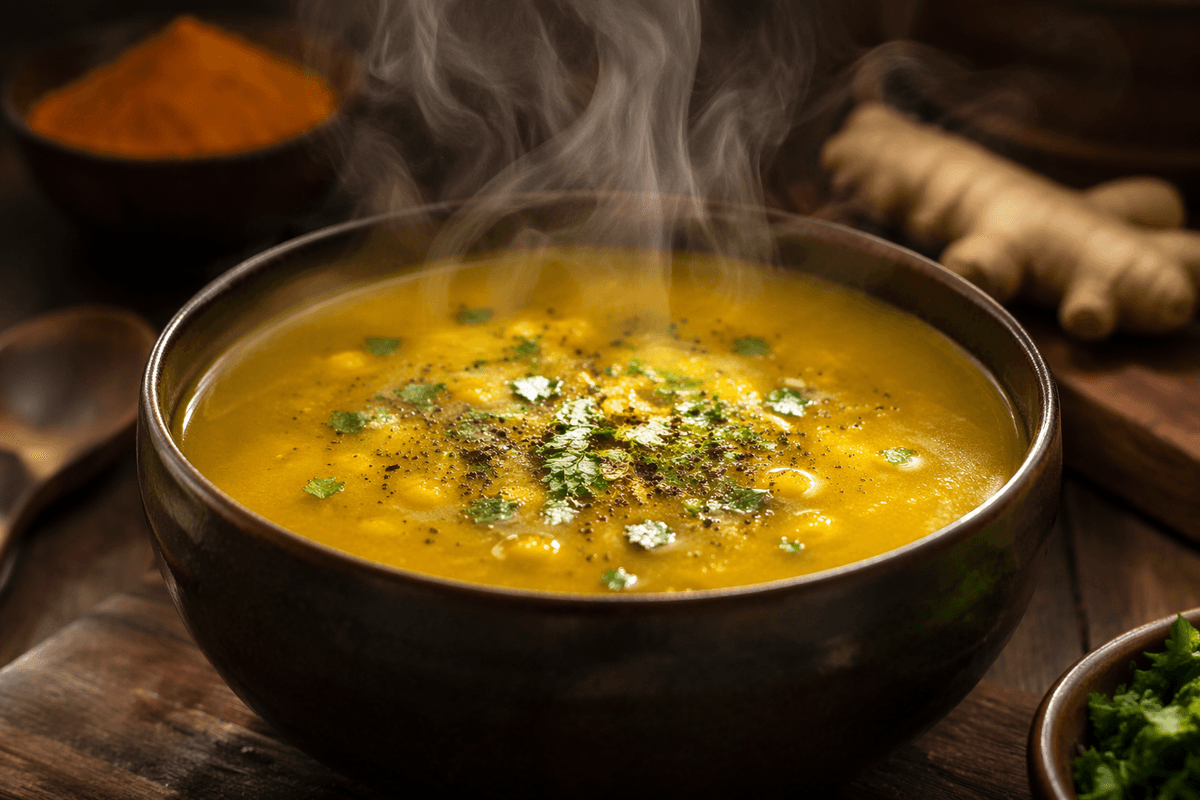
Sometimes it’s the smell that lands first—warm and a little medicinal—before you’ve even taken a bite. Then the bowl looks “richer” just because it’s more yellow, and it can feel like it should be more filling or more “doing something,” even if the recipe barely changed.
That reaction isn’t purely about willpower. Strong color and aroma can act like signals your brain uses to predict what’s coming, shaping appetite before the food hits your stomach. When a soup looks vibrant and smells intense, your brain may register it as more substantial and slow your eating a bit, which can make fullness feel like it arrives sooner. But it’s an uncertain cue: if the meal is actually light (or the turmeric taste reads as sharp), you can end up feeling satisfied at the table and then unexpectedly hungry later.
This is one reason people misread turmeric “working” and quietly nudge the spoonful higher over time.
Curcumin absorption changes with fat and pepper
You might notice it most when the same amount tastes “stronger” in one dish than another—silky in a coconut curry, but thin and a little chalky in broth. That difference can matter because the compound people talk about most, curcumin, doesn’t move into the bloodstream easily on its own. In plain water-based meals, a lot of it tends to pass through without being taken up, which can make it feel like you need more to get any effect.
Fat changes the setup. Curcumin is more compatible with fats than with water, so when turmeric is cooked into oil, ghee, eggs, or a creamy soup, more of it may stay in a form the gut can absorb. Black pepper adds another variable: piperine can slow certain gut and liver “cleanup” steps that would otherwise break curcumin down quickly. Your “usual” half-teaspoon can behave like a different exposure depending on the meal, and stacking peppered turmeric across the day can quietly raise the total more than you intended.
What nutrition you truly get from teaspoon amounts
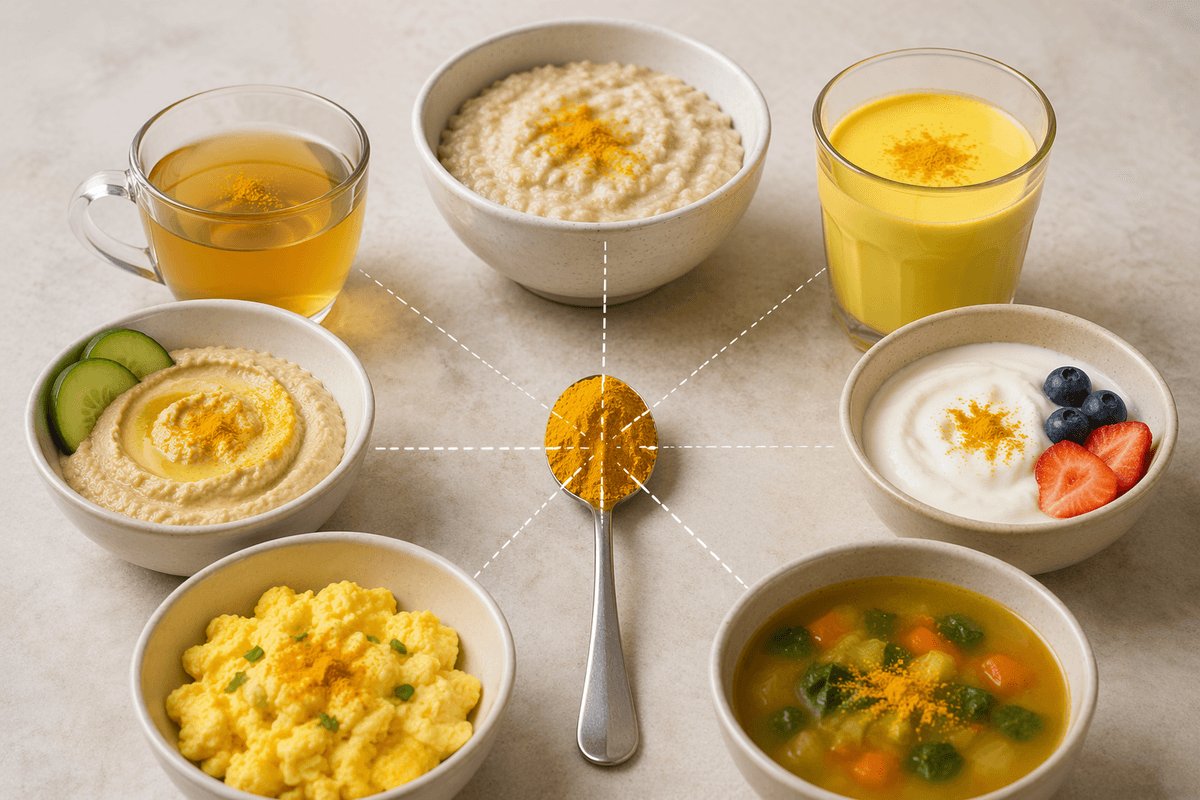
It’s often when you rinse the spoon that the mismatch shows up: the turmeric looked dramatic in the pot, but the amount you actually ate was a light dusting spread across a full serving. A teaspoon is only a few grams, and in many recipes that’s divided into multiple bowls, which can make the “dose” feel bigger than it is.
In culinary amounts, turmeric contributes small traces of minerals (like manganese and iron) and plant compounds, but it usually isn’t a major source of protein, fiber, or vitamins in the way vegetables, beans, or nuts are. The bright pigment and strong aroma are doing more sensory work than nutritional “weight,” which is why it’s easy to misinterpret color as potency.
Because each dish feels modest, it can seem reasonable to add turmeric to eggs, soup, tea, and smoothies in the same day—especially when pepper and fat are in the mix—without noticing that your total exposure is no longer “just a pinch.”
When sensible additions create unexpected stomach issues
It sometimes starts as a faint burn at the top of your stomach, or a sour aftertaste that doesn’t match what you ate. Because turmeric is framed as “gentle,” it can be easy to blame coffee, tomatoes, or stress first—especially when the amount you’re adding still looks like normal cooking.
But turmeric isn’t only color. Its bitter compounds can nudge digestion in ways that feel fine at low exposure and irritating once you’re stacking it across meals. In some people, more frequent turmeric—especially when paired with fat and black pepper—may increase how much active material contacts the stomach lining, and that extra stimulation can show up as refluxy discomfort, nausea, or looser stools. The inconsistency is what throws people: the same teaspoon can land differently depending on what else is in the dish and how often you’ve had it lately.
A peppered golden milk at night plus a capsule can push you into a range where you notice bruising more easily or feel more unsettled, particularly if you’re on blood thinners or have gallbladder issues. If a new pattern keeps repeating for more than a few days, it’s usually worth treating it as a signal, not a fluke.
Portion awareness that keeps meals enjoyable and steady
It’s often at the end of the day that it clicks: nothing you cooked felt excessive, yet your stomach feels a little raw or your reflux is louder than usual. That’s the main trap with turmeric—each use looks small in the moment, but the total can drift upward when it shows up in breakfast eggs, a pot of soup, a smoothie, and a nighttime tea.
Portion awareness here is less about counting milligrams and more about noticing repetition. When turmeric is spread across multiple servings, the per-bowl amount is diluted, but “stacking” reduces that buffer. Add fat and black pepper, and more curcumin may stay available long enough to matter, which can make two modest dishes feel like a different exposure than either one alone.
If you’re also using capsules—or you take blood thinners, have reflux, or have had gallbladder symptoms—the most useful cue is whether your usual digestion stays steady from day to day. When it doesn’t, treating turmeric like an occasional flavor rather than an automatic add-in can be the safer pivot to consider.