The “banana myth” and everyday potassium gaps
It can be a little surprising when a leg feels “tight” after a workout or your hands feel slightly puffy the morning after a salty dinner, even though you ate “pretty normal.” A lot of people mentally file potassium under one food—bananas—so if they’re not eating bananas regularly, they assume they’re missing something important, or they assume one banana now and then “covers it.”
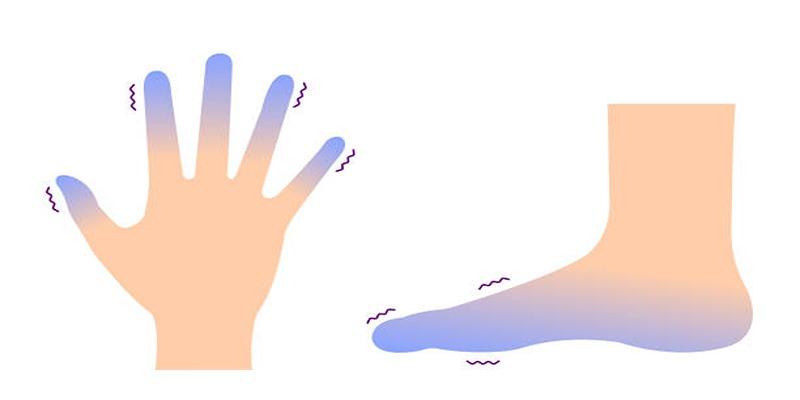
The gap is usually more ordinary than that. Potassium is spread across many everyday foods, but modern routines often stack sodium higher than potassium without anyone noticing. When sodium is consistently higher, the body may hold onto more water outside cells, and nerve and muscle signals can feel a bit less steady—showing up as thirst, mild cramping, or that heavy, “waterlogged” feeling.
What makes this confusing is inconsistency: a week of takeout, a long sweaty day, or a new medication can shift needs, so symptoms can come and go and feel hard to pin on food alone.
What potassium is really doing beneath the surface
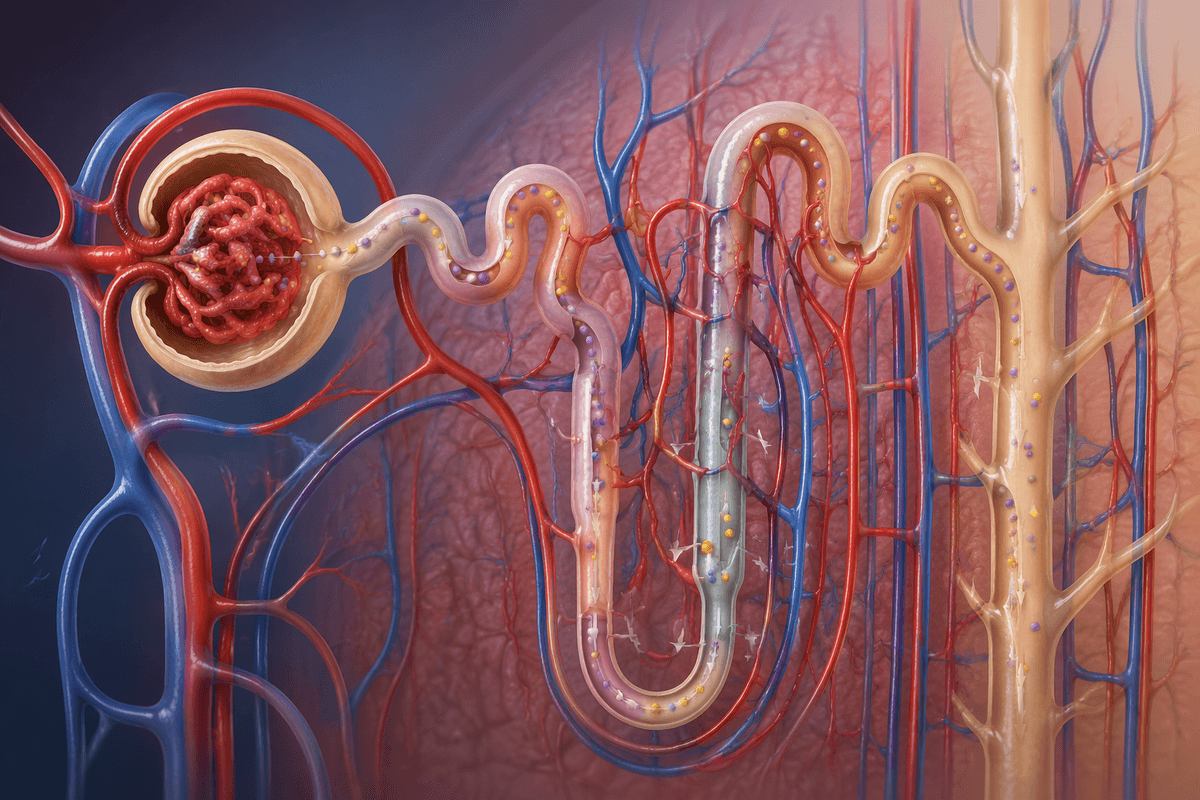
That “dry mouth but puffy fingers” combo can feel contradictory, especially after a salty meal or a long day on your feet. It may seem like you just need more water, yet the body can still behave as if it’s trying to protect its fluid—so you drink, and the feeling doesn’t fully settle.
Inside your tissues, potassium is one of the main ions that helps keep fluid distributed between the inside of cells and the space around them. Along with sodium, it supports the tiny electrical gradients that let nerves send signals and muscles contract and relax on time. When potassium intake runs low compared with sodium, those gradients can become a little less stable, and the kidneys may hang onto sodium more readily in some situations, which can pull water along with it—often outside cells. The result isn’t always dramatic; it can be a low-grade pattern of thirst, mild cramps, or “pressure” that comes and goes.
The sweating, certain blood-pressure medicines, or a week of packaged food can shift the balance enough to notice, then fade again. That’s why steady food patterns tend to matter more than a single “fix.”
Why modern eating patterns quietly drain potassium intake
It often shows up on the days that feel “normal”: a breakfast you can eat in the car, a desk lunch, a quick dinner that tastes a little saltier than you expected. Nothing feels extreme, yet by evening there may be that faint calf twitch, extra thirst, or a ring that fits tighter.
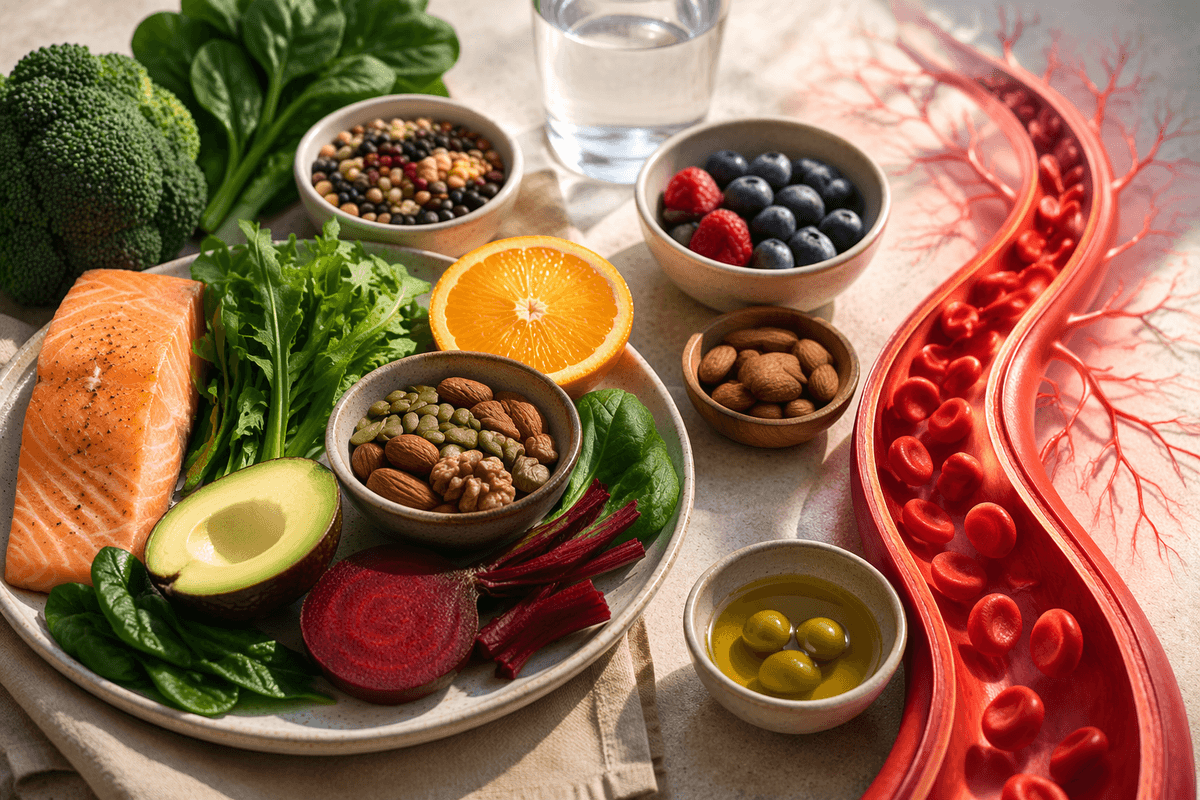
A big reason is simple displacement. Modern staples—bread, crackers, deli meats, fast-casual bowls, packaged snacks—tend to bring sodium without much potassium, while the foods that naturally carry potassium (beans, potatoes, leafy greens, yogurt, many vegetables) take more planning and don’t always make it onto the plate. Even “light” days can drift low if most calories come from refined grains, added fats, and protein without produce alongside.
Because the kidney responds to the sodium-to-potassium pattern over time, the effect can feel inconsistent: one salty week, one sweaty workout, or a new medication routine may make the same meals suddenly feel different.
Vegetables that outpace fruit in potassium
Sometimes the easiest upgrade doesn’t look like “health food” at all—it’s just swapping what takes up space on the plate. Fruit gets most of the credit for potassium, but vegetables can quietly outpace it, especially when the portion is more than a few bites.
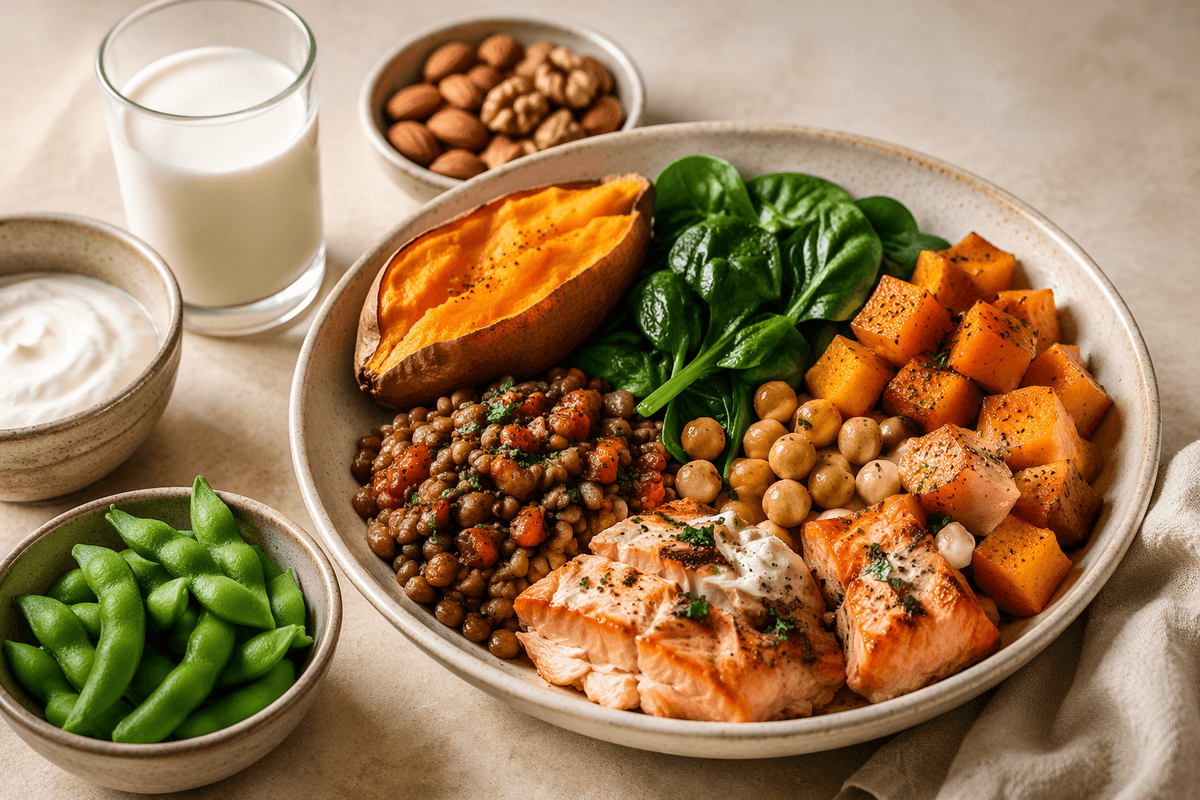
A baked potato or sweet potato is a common example: it can deliver a larger potassium hit than many fruits, and it tends to show up in a real dinner portion. Tomato products (like sauce or paste), winter squash, mushrooms, spinach, and beet greens can also add up quickly because you might eat them in concentrated forms—cooked down, blended into soups, or piled into bowls. That concentration matters: cooking shrinks volume, so potassium per forkful goes up, even if the meal doesn’t feel “big.”
A banana at breakfast feels like you “handled potassium,” but a salty lunch with no vegetables can still leave the overall pattern tilted.
Beans, lentils, and soy as steady sources
Midweek meals are where things often slip: you feel mostly fine, then notice a light calf cramp at night or a “tight” waistband after a salty lunch, even though nothing you ate seemed unusual. Beans and lentils can be a steadier fix than people expect because they show up in full portions—cups, not slices—so potassium intake doesn’t depend on remembering a single produce item.
Part of why they help is the slow, repeatable pattern. When potassium arrives alongside fiber and plant protein, digestion tends to be slower, and people often eat them with other potassium-carrying foods (tomatoes, greens, potatoes). That can support a more consistent sodium-to-potassium balance across the day, which is what the kidneys and muscle signaling respond to over time.
Soy foods—edamame, tofu, tempeh—work similarly, though portions vary, and some packaged options swing salty, which can make the “puffy but thirsty” feeling feel inconsistent again.
Dairy, fish, and nuts in realistic portions
It’s easy to notice the “almost better” feeling after a meal that seems balanced—less thirst, fewer little twitches—then have it slip again the next day when portions change. That’s where foods that show up in repeatable, everyday amounts can matter more than “perfect” choices.
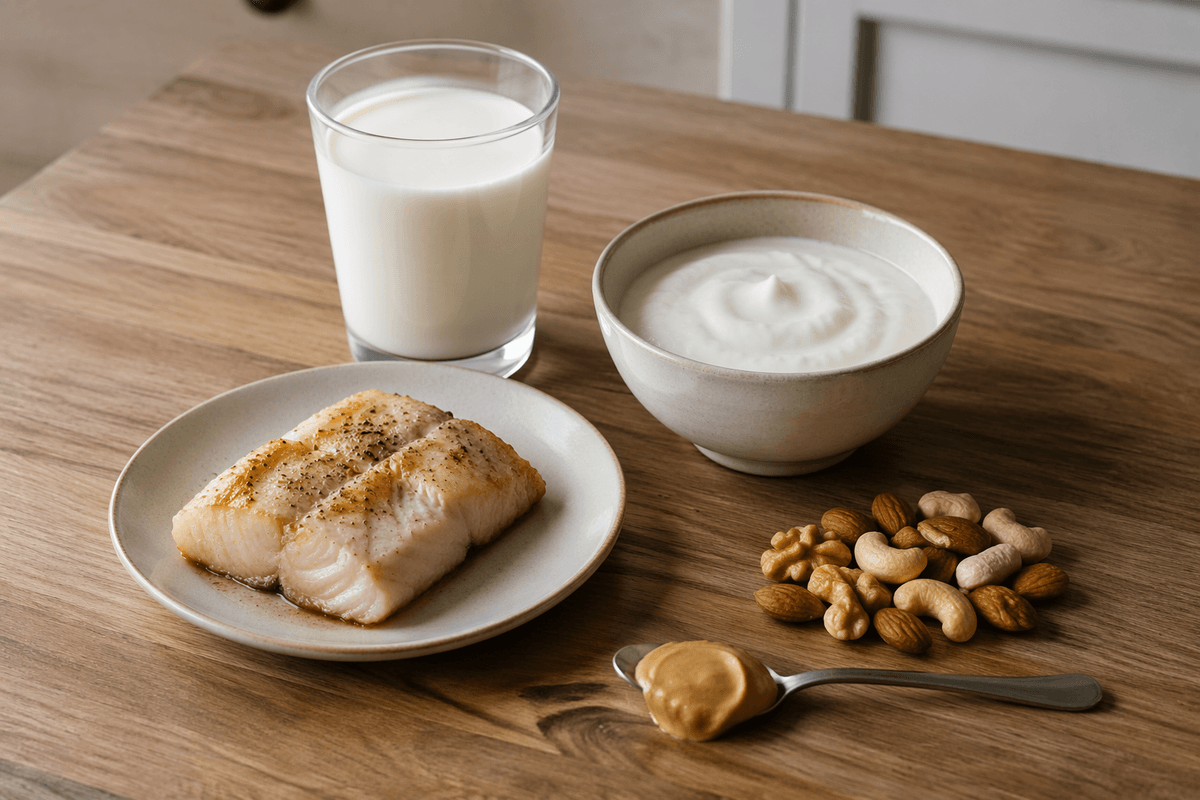
A cup of milk or yogurt can quietly add potassium in a form people actually eat consistently, especially when it replaces a snack that was mostly sodium. Fish can contribute too, though the details get messy: a plain fillet is different from smoked, canned, or heavily seasoned versions, where sodium can climb and the body may feel puffy again despite a “healthy” meal.
Nuts and nut butters add up in small handfuls, but salted versions can blur the signal—enough potassium to help, enough sodium to confuse how your hands or calves feel later. If that pattern keeps repeating, it’s worth noticing which versions and portions are showing up most often.
When “more potassium” creates confusion or discomfort
The first time someone tries to “push potassium,” it can feel oddly uncomfortable—an unsettled stomach after a big bean bowl, or a heavy, bloated feeling after loading up on tomato juice or dried fruit. That can be misread as “potassium isn’t for me,” when it may simply be a portion jump, extra fiber or sugar alcohols, or a salty add-on in the same meal shifting how your gut and fluid balance respond.
Confusion also shows up when symptoms don’t match expectations. If sodium stays high (soups, sauces, deli foods), adding potassium-rich foods may not immediately change that puffy-ring feeling because the kidneys respond to the overall pattern over days, not one meal. Meanwhile, sweat losses, sleep, and stress hormones can change how much water you hold onto, so the same “higher potassium day” can feel different week to week.
If you have kidney disease or take certain medicines that raise potassium, “more” can become too much. If you’re unsure, that’s a reason to check before intentionally increasing it.