Why “more energy” rarely comes from one nutrient
It can start as a familiar dip: you eat “better” for a few days, maybe add a greens powder or a new supplement, and still hit that slow afternoon stretch. That’s when it’s easy to assume you just haven’t found the one missing thing yet.
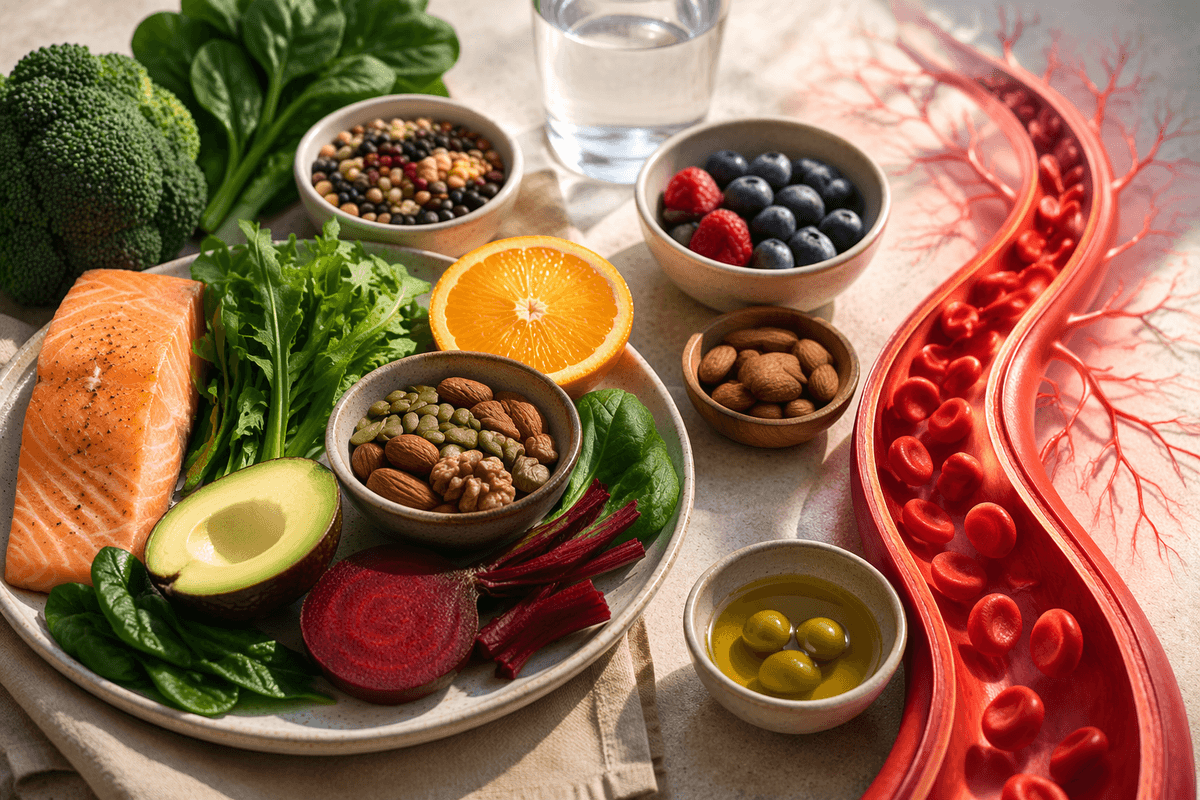
But feeling “more energy” usually isn’t a single switch. Your body has to turn food into usable fuel, move oxygen where it needs to go, and keep blood vessels responsive enough to match demand. If one part is slightly under-supplied—because meals are skipped, protein and produce are inconsistent, or coffee stands in for breakfast—the whole system can feel less steady, even if one nutrient looks “fixed.”
That’s also why cold hands or heavy legs can be confusing. In some cases, it may feel like low energy, when it’s really uneven supply and flow showing up as slower warmth, slower recovery, and energy that doesn’t arrive on schedule.
ATP production depends on B vitamins and magnesium
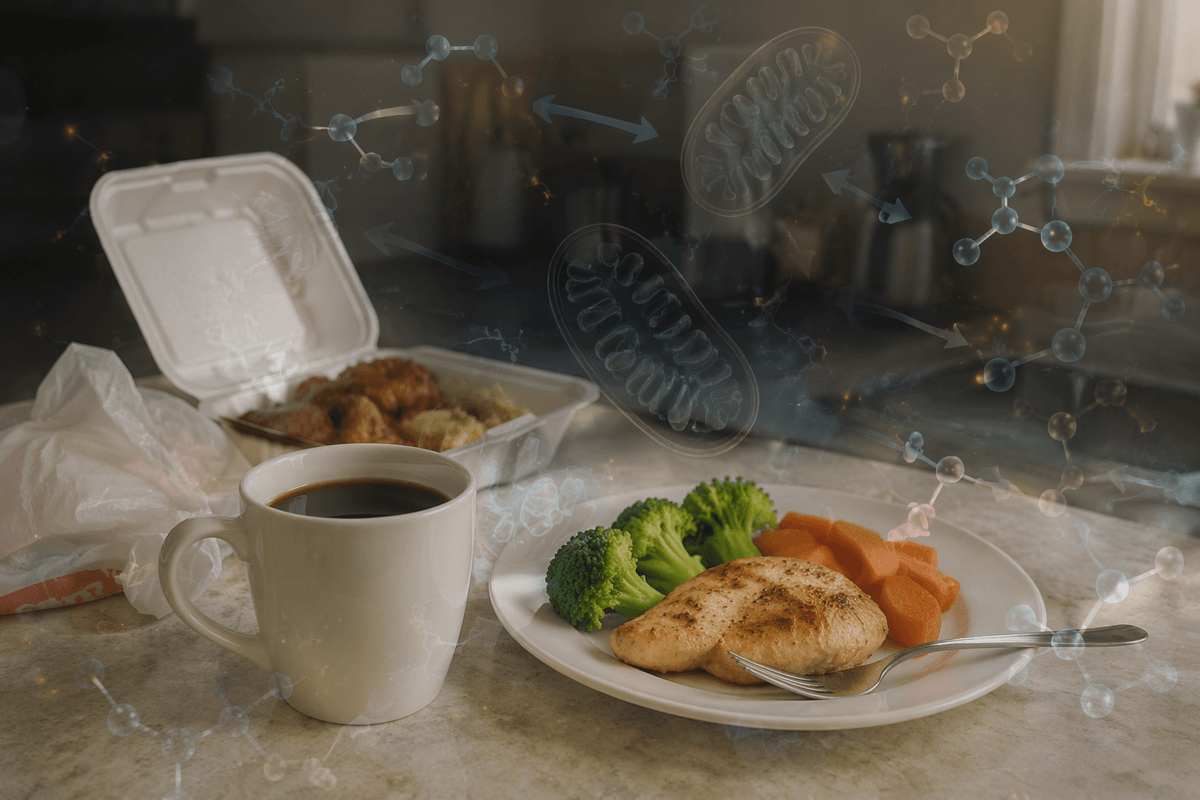
Sometimes it’s not sleepiness that shows up first, but a “flat” feeling in your muscles—like the stairs are a longer project than they should be, even though you ate something. Then later, you might notice the pattern is inconsistent: a decent lunch helps one day, and the next day the same lunch doesn’t seem to land the same way.
One reason is that turning food into usable energy is a step-by-step process, and several B vitamins and magnesium tend to act like the helpers that keep those steps moving. Carbohydrates, fats, and protein don’t automatically become “go” energy the moment you swallow them; they have to be broken down and moved through pathways that rely on vitamin B1, B2, B3, B5, B6, and biotin, with magnesium frequently involved in stabilizing and using ATP once it’s made. When intake is patchy—say breakfast is coffee, lunch is takeout, and dinner is whatever’s easiest—your body may still get enough calories, but have a harder time running the conversion smoothly.
It can feel like you “need more carbs” or “need caffeine,” because those give a quick signal, but the underlying issue may be that the processing machinery is under-supplied often enough that energy feels delayed or less reliable. If that mismatch keeps repeating, it can start to look like low motivation when it’s really a supply chain problem you only notice on the days demand is higher.
Oxygen delivery: iron, B12, folate, copper
You might notice it first in your hands, not your head: fingers that stay cool in an air-conditioned office, or a light “out of gas” feeling during a short walk that doesn’t match how hard you’re working. The confusing part is that it can come and go—fine on a weekend, flatter on a workday—so it’s easy to blame stress or sleep and move on.
In some cases, that on-and-off quality tracks with oxygen delivery. Red blood cells are built and maintained from a mix of supplies, and iron is only one of them. Vitamin B12 and folate support the cell-building steps that let red blood cells form properly, and copper helps with iron handling and movement in the body. When those inputs are inconsistent—like long stretches of coffee and a pastry, takeout without much protein, or weeks with very little produce—the body may still carry oxygen, but not as efficiently as it could, especially when demand rises.
It can feel like “I need more cardio” or “I’m just out of shape,” when the pattern is really about what’s available for blood to carry and deliver. If it keeps repeating, it may show up as slower warm-up, more noticeable exertion, or a dip that hits earlier than you expect.
Blood vessel tone reacts to nitrates and potassium
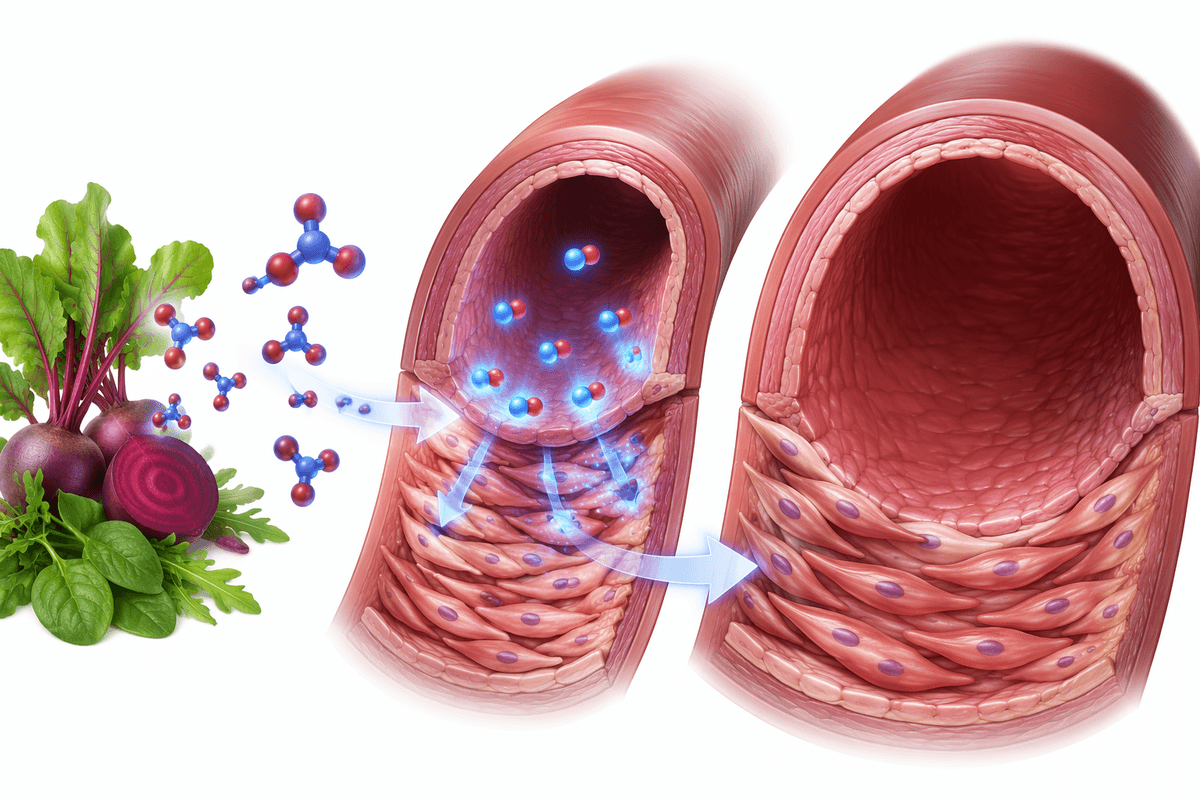
There’s a particular kind of “tight” day where your hands stay cold, your face looks a little washed out, and even after you eat, you don’t get that subtle sense of your body “opening up.” It can be inconsistent enough to make you doubt it—like maybe it’s just the weather, or you’re imagining the sluggish circulation.
Part of what you may be noticing is blood vessel tone: how ready your vessels are to relax or stay slightly constricted. Foods that provide nitrates (often from certain vegetables) can be converted in the body into nitric oxide, a signaling molecule that helps vessels relax so blood flow can match what your muscles and organs are asking for. If your produce intake swings—some days a salad, other days mostly coffee and takeout—this signaling can feel less dependable, especially during that mid-afternoon “drag” when you’re still upright and trying to focus.
Potassium can sit in the background here, too. It helps shape how excitable smooth muscle and nerves are, which influences how vessels respond to stress, caffeine, and salt. When potassium-rich foods drop out for a few days, it may not feel like a clear symptom so much as a vague mismatch: you’re fed, but you don’t feel well-circulated, and the same routine suddenly takes more effort than it should.
Fats that move blood: omega-3s and vitamin E
Some days it’s a dry, slightly “sticky” feeling in your body—hands that don’t warm up, legs that feel heavy after sitting—despite eating enough. It can be subtle and inconsistent, which makes it easy to chalk up to caffeine, weather, or just getting older.
One quieter driver can be the kind of fats showing up in your meals. Omega-3 fats (like EPA and DHA from fatty fish, or ALA from some plant foods) become part of cell membranes, including in blood vessels and blood cells. When those membranes are more flexible, signaling around vessel relaxation and inflammation may run a bit smoother. If your fat intake is mostly from fried takeout or “whatever oil is around,” that balance can drift without being obvious day to day.
Vitamin E fits here because it helps protect fats in those membranes from oxidative wear. When intake is low for long stretches, it may not cause a clear symptom—just a sense that recovery and circulation feel less reliable than they used to.
Hydration, sodium, and dizziness after “clean eating”
It can show up as a quick head-float when you stand from your desk—especially after a few days of “clean eating” where takeout drops off, packaged foods disappear, and your coffee intake stays the same. The confusing part is the inconsistency: you may feel lighter and “less puffy,” yet also a little unsteady in the afternoon.
One reason is that sodium often falls sharply when processed foods go away, and sodium helps your body hold onto water in the bloodstream. If fluids are high but sodium is suddenly low, blood volume can run a bit lower than you expect, so less blood returns to the heart when you stand and pressure can dip briefly. That may feel like dizziness, cold hands, or a tired “low-flow” sensation—easy to misread as detox, low blood sugar, or needing more caffeine.
This can be more noticeable if you’re sweating, doing hot yoga, taking long walks, or using diuretics like coffee. If the lightheaded feeling keeps repeating, lasts more than a moment, or comes with chest pain, fainting, or unusual shortness of breath, it’s worth getting checked out.
When reasonable supplementation creates confusing side effects
It’s a little jarring when you add something “reasonable” and your body gets noisier instead of steadier—an odd fluttery feeling after your usual coffee, a mild headache that wasn’t there last week, or a stomach that suddenly feels touchy at lunch. Because you were trying to help energy and circulation, it’s easy to assume the new pill is either a miracle or a problem, with no in-between.
Often it’s more about timing and overlap than a single ingredient. A B-complex can feel activating in some people, especially layered on caffeine and a skipped breakfast, because you’ve added more capacity for energy pathways without adding much fuel or fluid to run them smoothly. Iron can be rough on the gut, and magnesium can loosen stools—effects that can look like “my body hates supplements,” when it may just be dose, form, and an empty stomach.
The “better” can still feel off if it pushes one lever ahead of the rest. If side effects keep repeating, or you notice new palpitations, ongoing dizziness, or shortness of breath, it’s worth pausing and checking in with a clinician rather than stacking on another fix.



![5 Best Paid Surveys for Kids and Teens [Online Surveys]](static/image/2026/05/11/1945571a-d94c-4f6c-9d81-a136672793d2.png)