Why Hull surprises weekend city-breakers
We nearly wrote Hull off as a “do it in a few hours” place—then we looked at the map properly on the train and realised how much sits in tight, walkable pockets. The surprise isn’t a single blockbuster sight; it’s how quickly you can switch between Old Town lanes, the marina, and proper waterfront air without spending half your weekend on transport. Hull’s best bits don’t shout for attention: if you drift into the big-chain centre by default, it can feel generic fast.
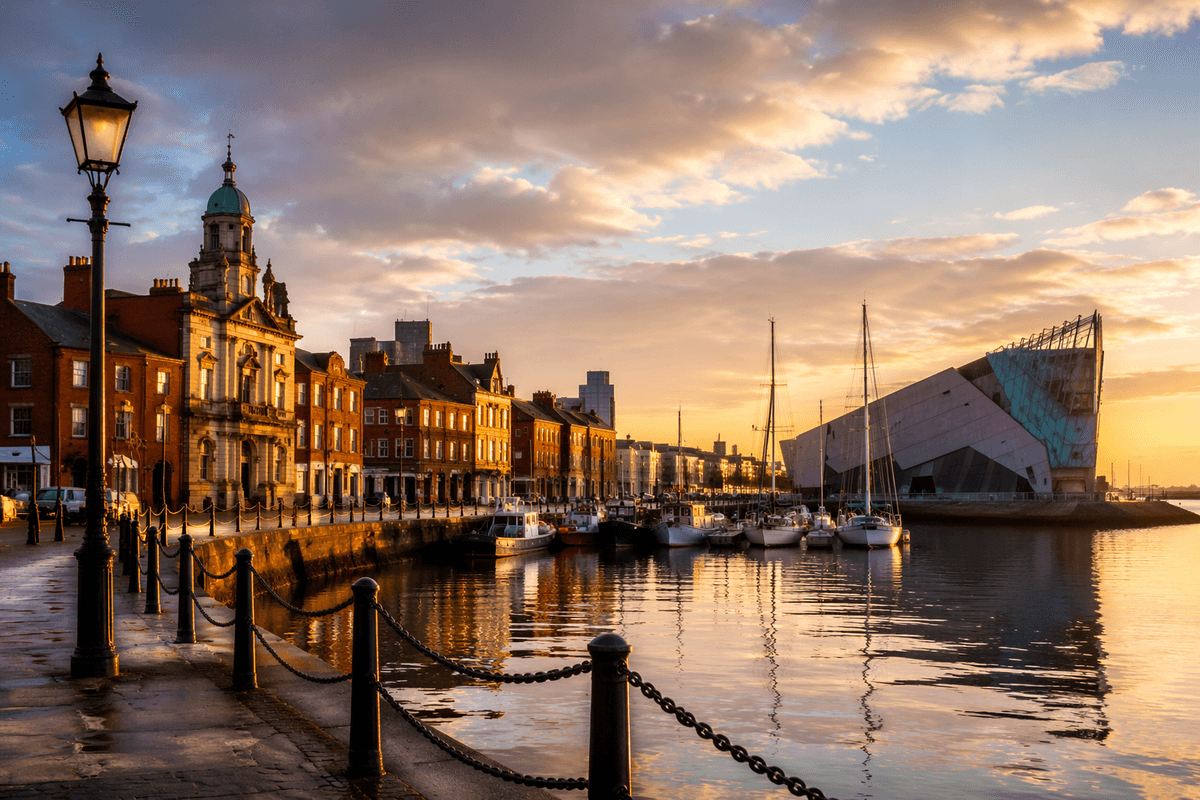
For a two-night break without a car, Hull works when you treat it like clusters rather than a checklist. Old Town (museums, pubs, architecture) pairs naturally with the marina/Fruit Market for food and a late-evening wander, which is handy when you arrive Friday and don’t want a complicated plan. Weather matters more than you’d think: the city is great in drizzle if you lean on indoor culture, but exposed walks can feel longer when the wind picks up.
And because a lot of the “why it’s good” sits behind opening hours, the weekend can tip either way—Sunday closures and peak-time queues are the friction points. A simple must/optional/skip structure keeps the pacing calm, and gives you a backup move when one museum or one forecast refuses to cooperate.
Day 1 Old Town—Must: Streetlife; Optional: The Deep; Skip: chains

Saturday morning, we hesitated at the first decision point: commit to a “proper attraction” straight away, or let Old Town set the tone. Old Town rewards the slower start. From Paragon Interchange it’s an easy walk down to Whitefriargate and into the lanes, and the best version of Hull is simply moving between small moments—Trinity Market for a warm breakfast when the weather’s doing that damp-grey thing, then weaving towards High Street via the pubs and museums without forcing a timeline you’ll resent by 3pm. It works well because everything’s close; it doesn’t work if you keep getting pulled back towards the bland centre for familiar names.
Make streetlife the “must”: people-watch around the Fruit Market and marina later, but in the morning keep it Old Town—Wilberforce House and the Streetlife Museum are both strong, indoor, and easy to dip in and out of if you’re not museum-power-walking. If you arrive and something’s shut or you’re museumed-out quickly, you haven’t lost the day—you can just extend the wander, grab coffee, and keep the pace calm.
The Deep is a good optional, not a default. It’s a longer walk east (still doable), and it’s brilliant when the wind is savage or you want one “big” ticketed thing; it’s less satisfying if it’s busy and you’re trying to keep the day feeling unforced. If you do it, book ahead and put it mid-afternoon when your feet want a break; if you skip it, you’ll still have a full day by staying local and saving time for a marina dinner.
What we’d actively skip on Day 1 is “chains by gravity”—the safe lunch you could have anywhere. Hull’s advantage is atmosphere in small pockets; once you’re seated under the same signage you see at home, the place stops feeling like a weekend away, and you’ll wonder where the day went.
Day 2 coast—Must: Humber Bridge; Optional: Spurn; Skip: car-only
Sunday morning we stood in the hotel doorway doing the most British bit of planning: checking the wind, not the rain. The Humber Bridge is the “must” because it still feels like a coastal day without needing a car—big sky, river-wide views, and that bracing sense you’ve properly left the city. It works best if you treat it as a single outing rather than a bolt-on: get yourself to the Hessle side by local bus or train, then walk the dedicated path onto the bridge and commit to at least a partial crossing. The limitation is exposure; if it’s gusty you’ll spend more energy than you expect, so build in a warm stop afterwards rather than forcing a long loop.
If the weather behaves, the bridge pairs nicely with a low-stakes wander through the nearby green space on the north bank (good for a slower, “we actually breathed today” pace). If it doesn’t, don’t fight it—do the bridge for the views, then retreat back into Hull for lunch and an indoor hour that won’t feel like defeat. That mix keeps the day satisfying even when the forecast turns halfway through.
Spurn Point is a tempting “proper coast” optional, but without a car it’s a commitment: services can be limited (and seasonal), and once you’re out there you’re dealing with long, flat walking and weather that changes its mind. It’s worth it if you both want a wilder, edge-of-the-map day and you’re happy to spend most of Sunday in transit; otherwise, skip the car-only scattering of villages and beaches and let the bridge be the clean, reliable coastal hit.
Leave Hull satisfied: what to book next time
On Monday morning, the only thing we regretted was not locking in one “anchor” booking before we arrived. If you want The Deep, pre-book a timed slot so you’re not making a tired, weather-driven decision in a queue; it’s the kind of place that’s brilliant when it’s calm and oddly draining when it’s packed. The same goes for dinner around the marina/Fruit Market: walk-ins can work, but at peak weekend times you’ll waste the nice part of the evening hovering.
Next time, we’d book one big-ticket indoor option and one proper meal, then leave everything else deliberately loose. Hull rewards that lighter grip: you can lean into Old Town if it’s wet, or chase the waterfront air when the sky behaves, without turning the weekend into a logistics exercise. If you’re choosing between “more sights” and “more wandering,” pick wandering—you’ll leave feeling like you actually spent time somewhere, not just passed through it.