Why the mirror changes day to day
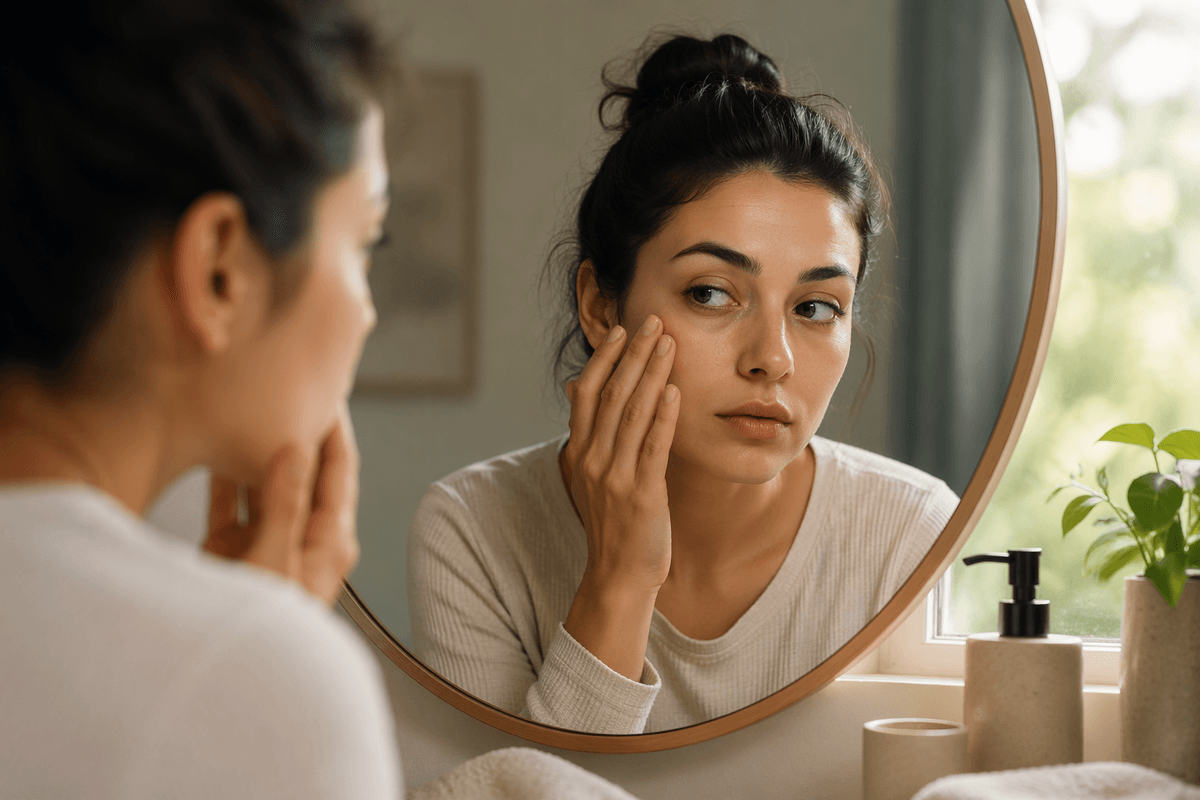
You wake up, catch your reflection, and it looks like your face “settled” differently overnight—fuller under the eyes, softer at the jaw, maybe a little uneven. That shift can feel inconsistent, especially when nothing else seems different, and it’s easy to read it as weight gain or a new problem when it may be something much more temporary.
Day to day, your face is one of the first places you can notice small changes in fluid balance. Water moves between blood vessels and nearby tissues, and it doesn’t always move back out at the same speed. A saltier dinner, more carbs than usual, or a late night can all tilt the balance toward holding onto more water for a while, even if your body weight barely changes.
What makes it confusing is that the mirror shows a snapshot, not the trend. Stress, screen-heavy days, and long stretches of sitting can stack on top of food and sleep, slowing the normal return of fluid from the head and neck. So the “puffy” look may come and go in a pattern—even when it doesn’t feel predictable in the moment.
Fluid balance is the hidden shape shifter
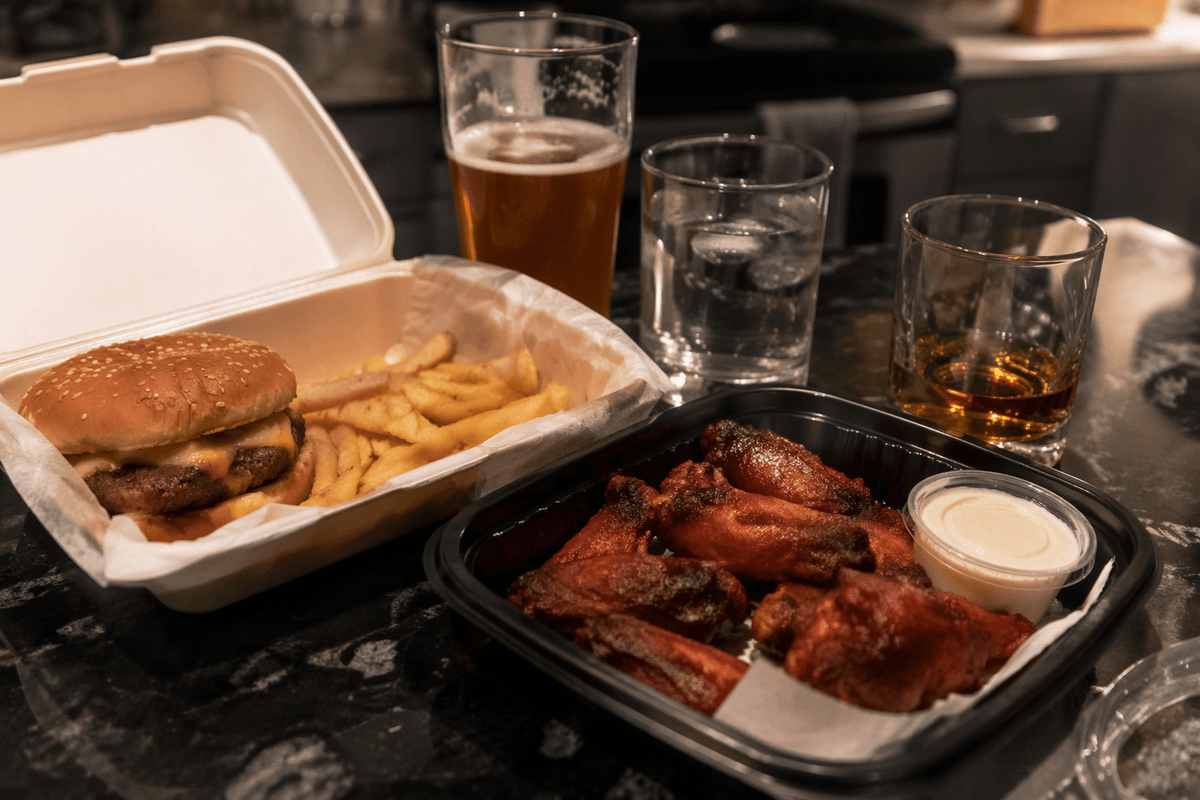
On a morning after takeout or a couple of drinks, the skin around your eyes can feel a little tighter, like there’s less “give” when you wash your face. It’s subtle, but it can make your features look smoothed out in ways that don’t match how you remember yesterday, which is why it’s often misread as fat gain instead of a temporary shift.
Your body is constantly deciding where water should sit—inside blood vessels, inside cells, or in the space between them. Sodium tends to pull water into that in-between space, and higher-carb meals can refill glycogen, which stores water alongside it. Also, it may dehydrate you at first, then leave your system more likely to hold onto water later as it tries to rebalance.
You can do “everything right” in the morning and still look puffier because the decision was made hours earlier, and the fluid hasn’t fully shifted back yet. If the pattern keeps repeating, it can help to think in 24–48 hour windows rather than judging a single mirror check.
Sleep, cortisol, and overnight fluid pooling
It’s often in the first hour after waking that your face can look a little “held,” especially under the eyes—then gradually sharpen as the day goes on. That change can feel unfair if you went to bed thinking you’d reset everything, but overnight you’re mostly still, horizontal, and not using the usual muscle pressure that helps move fluid out of the face and neck.
Sleep quality can add another layer of inconsistency. When sleep is short or broken, cortisol tends to run higher, and that can nudge the body toward holding onto more sodium and water. In some people, it also changes how puffy the soft tissue looks by morning, even if their routine didn’t change much.
Sleeping flatter, face-down, or with a congested nose that keeps you shifting can slow venous and lymphatic return from the head. The result may look like sudden “bloating,” even though it’s often just fluid that hasn’t fully cleared yet.
Lymphatic flow depends on movement and pressure
Halfway through the morning, you might notice your face looks a little more defined without you doing anything special—just after walking around, showering, talking, and being upright. On a day when you roll from bed to laptop and barely move, that “sharpening” can lag, which can feel inconsistent and easy to blame on whatever you ate.
Part of what’s changing is how fluid gets cleared from the tissues. Unlike blood, lymph doesn’t have a central pump. It relies on small pressure changes from muscle movement, breathing, swallowing, and even turning your head and neck to help move fluid through tiny vessels and back toward circulation. When movement is limited for hours, especially with a forward-head posture at a screen, that gentle pressure system may work less efficiently, so fluid can linger around the eyes, cheeks, and jawline longer than you expect.
This is also why the mirror can be misleading early on: the same face can look different simply because the “drainage” timing is different that day, not because anything permanent has changed.
Inflammation makes facial tissue hold onto water
Sometimes it’s not a dramatic “swollen” look, just a faint heat or tenderness when you press along your cheeks or under your eyes—and the puffiness seems to sit there longer than usual. That can be especially confusing when your meals were normal, because it may feel like the mirror is reacting to nothing.
One reason this happens is that mild inflammation can make facial tissue more “sticky” for fluid. When the immune system is even slightly activated—by a rough night of sleep, a hard workout you’re still recovering from, or seasonal allergies—local chemical signals can make small blood vessels leakier. More fluid and proteins can slip into the space between cells, and that extra material tends to hold water in place, so the face can look smoother, fuller, or less defined until the signals settle down.
This kind of puffiness doesn’t always match the trigger in a clean timeline. You might feel fine but wake up puffy after a couple days of congestion or stress, and then look sharper again even before you can point to what changed.
When helpful habits backfire in confusing ways

Some mornings it feels like you did all the “right” things—extra water, a clean dinner, an early bedtime—and your face still looks softer. That mismatch can be oddly discouraging, and it’s easy to assume you missed a hidden trigger when the timeline is just messier than the mirror makes it seem.
Helpful habits can create short-term “noise.” A harder workout can leave your body in repair mode, with inflammatory signals that temporarily hold fluid in tissues. A very low-salt day after a salty stretch can also feel inconsistent because hormones that regulate sodium and water don’t switch off instantly. Even sleeping longer can backfire if it means more hours lying flat, giving fluid more time to pool in the face before you’re upright and moving again.
The puffiness may be the delayed echo of yesterday’s stress, movement, or congestion, not proof that today’s choices “didn’t work.” If the pattern keeps repeating in spite of steady routines, it can be worth noting what was different 24–48 hours earlier.
Revised understanding: patterns beat single-day judgments
On days when your face looks sharper by lunchtime, it can be tempting to credit whatever you did that morning—and blame yourself when the next day doesn’t match. The frustration usually comes from treating one mirror check like a verdict, even though the signals that move fluid in or out don’t update on a neat schedule.
A more useful lens is repetition. If puffiness shows up after late meals, two nights of lighter sleep, a screen-heavy stretch, or a few days of congestion, that’s your body’s timing showing through: hormones, vessel “leakiness,” and slow lymphatic return can lag behind your intentions. Single days can be noisy; patterns are clearer.
If your face stays persistently swollen, painful, or changes in a way that doesn’t ebb over days, it may be worth checking in with a clinician rather than assuming it’s just routine fluctuation.