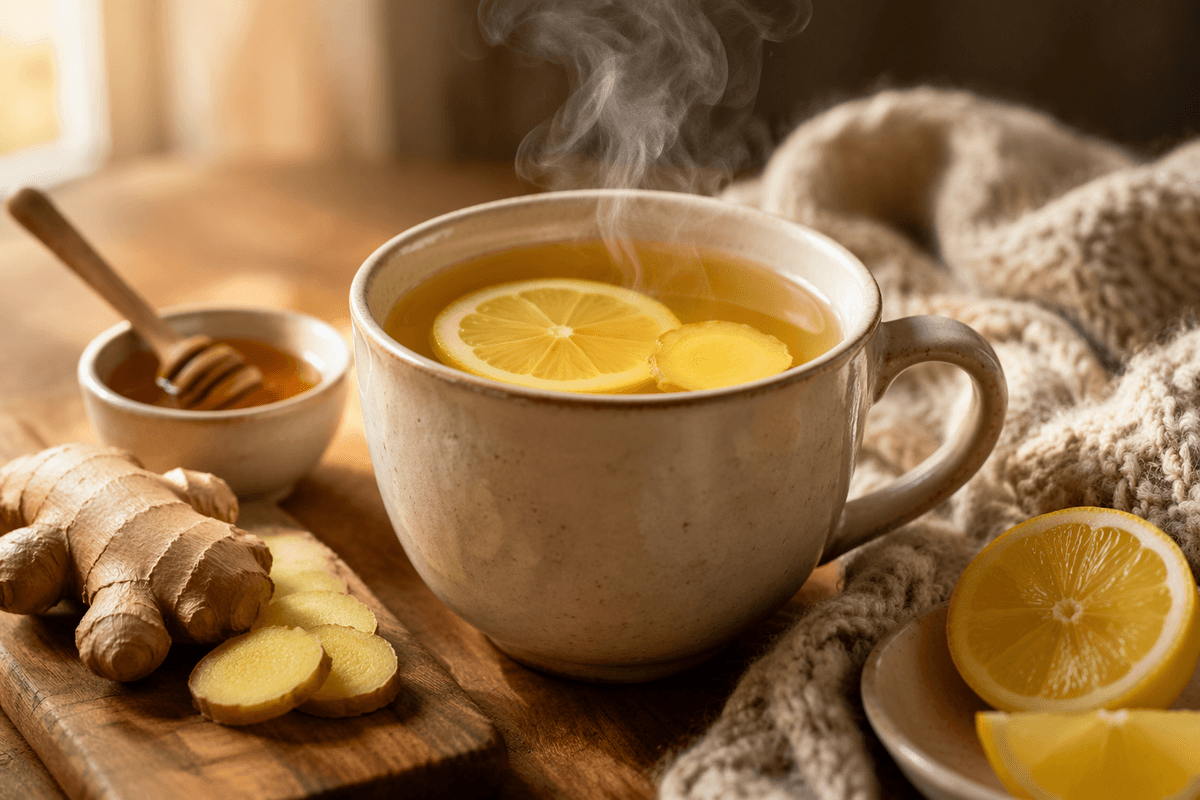
The promise of ginger warmth during throat pain
The first few sips can feel like a small reset—warmth spreading down the throat, swallowing getting a little less sharp, and that dry “scrape” easing just enough to talk again. It’s easy to credit the ginger right away, especially if the drink has a noticeable heat and smell that signals “something is happening,” even while the soreness itself stays inconsistent from hour to hour.
That quick comfort often lines up with what warm fluid does on contact: it may thin sticky mucus, increase saliva, and briefly relax tight throat muscles that have been guarding every swallow. When the throat lining is irritated from a cold or overuse, those changes can make the surface feel less exposed—even if the underlying inflammation hasn’t changed yet.
Ginger adds a distinct bite that can make the relief feel more “active,” but the experience isn’t always straightforward. Some people feel soothed and slightly clearer, while others notice a faint burn that makes them second-guess whether the drink is helping or just distracting them for a minute.
Why warmth feels soothing even without curing
You might notice it most on the second or third swallow: the same sore spot is still there, but it feels less “raw,” and the urge to clear your throat drops for a minute. That can be confusing, because the relief shows up fast—then fades—so it’s tempting to assume something in the drink is treating the cause when the discomfort keeps coming back in waves.
Warmth often helps because it changes the way the throat surface behaves, not because it removes what irritated it. Heat and fluid can nudge saliva and mucus into a thinner, more slippery layer, so air, talking, and swallowing create less friction on a tender lining. At the same time, warmth can slightly relax the muscle guarding that happens when swallowing has started to feel risky, which can make each sip feel smoother even while the tissue underneath is still inflamed.
If your throat is dry from mouth-breathing, indoor heat, or a long stretch of talking, warm drinks may feel dramatically better—until the dryness returns. If the irritation is deeper or paired with postnasal drip, the comfort may be briefer, because the surface gets re-irritated soon after the cup is down.
Ginger’s bite: what drives the sensation
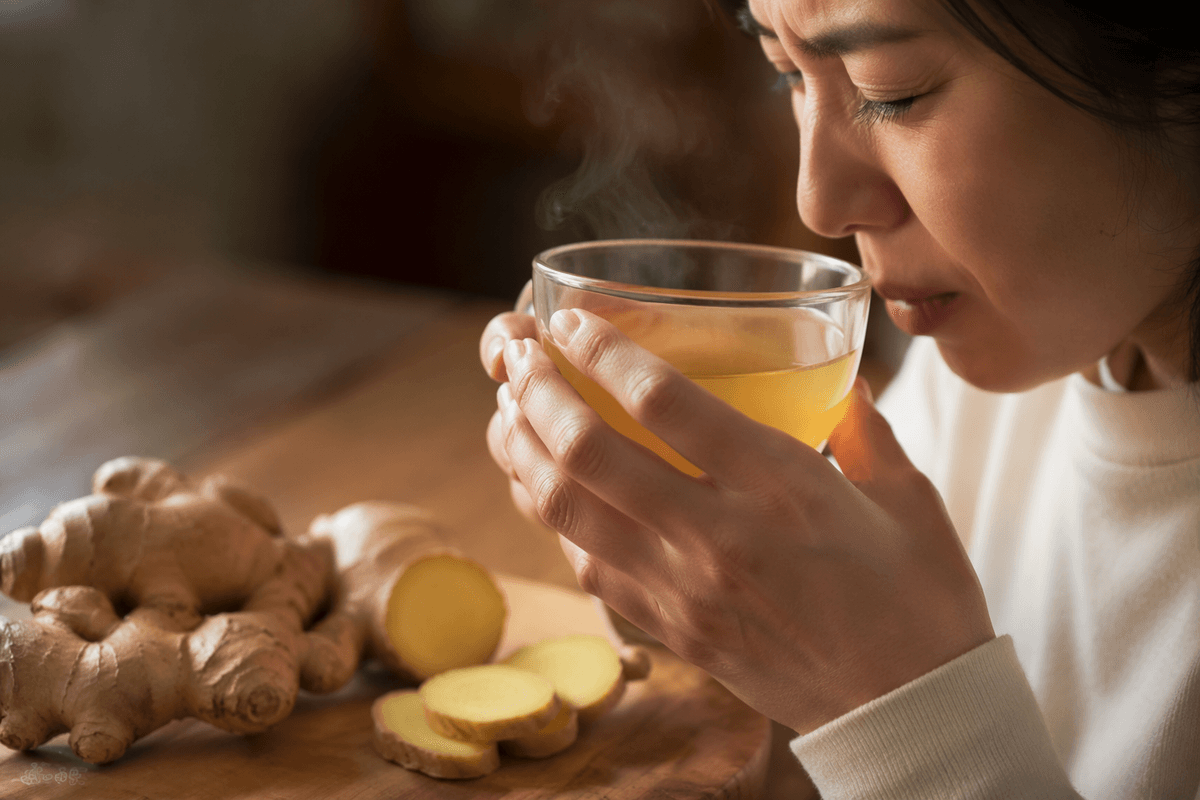
Sometimes the first clue is that quick tingle at the back of the tongue, followed by a warm “rush” that can feel sharper than the tea itself. It’s easy to read that as the sore area being treated, especially when the sensation is immediate and noticeable—yet the tenderness may still spike again the next time you swallow.
That bite mainly comes from ginger’s pungent compounds, which can stimulate the same surface nerve endings that respond to heat and irritation. When those nerves fire, your mouth and throat may produce more saliva, and that extra moisture can briefly make swallowing feel smoother. At the same time, a strong sensory signal can compete with pain signals in the brain, so the soreness may feel dulled for a short window even if the throat lining hasn’t actually changed much.
Those same nerves can interpret ginger as “too much” when the tissue is already raw. In that moment, the drink can feel like it’s stinging the exact spot you were trying to calm, which can be less about damage and more about an irritated surface reacting strongly to a concentrated stimulus.
When the “helpful” drink suddenly stings
It can catch you off guard when a sip that felt comforting yesterday suddenly lights up the sore spot today. You take the same drink, in the same mug, and instead of “warming,” it feels prickly or hot in a way that makes you pause mid-swallow. That flip can feel like a sign you’ve made things worse, even though the throat’s sensitivity can shift hour to hour with sleep, mouth-breathing, and how dry the lining is at that moment.
When the surface is more exposed, the nerve endings there tend to react faster and louder. Ginger’s pungent compounds can push on those irritated sensors, and the brain may read it as stinging rather than soothing—especially if the sip is strong, the tea is very hot, or you’ve been clearing your throat a lot. In some cases, reflux can add a second layer of irritation, so a “spicy” drink doesn’t just tingle going down; it can feel sharper afterward because the tissue was already primed to over-respond.
The sting may fade after a few minutes, or it may stick around and make you avoid swallowing, which can leave you drier and more uncomfortable than before. If a drink reliably burns instead of settles, that pattern is usually worth respecting.
Honey, lemon, and milk change the experience
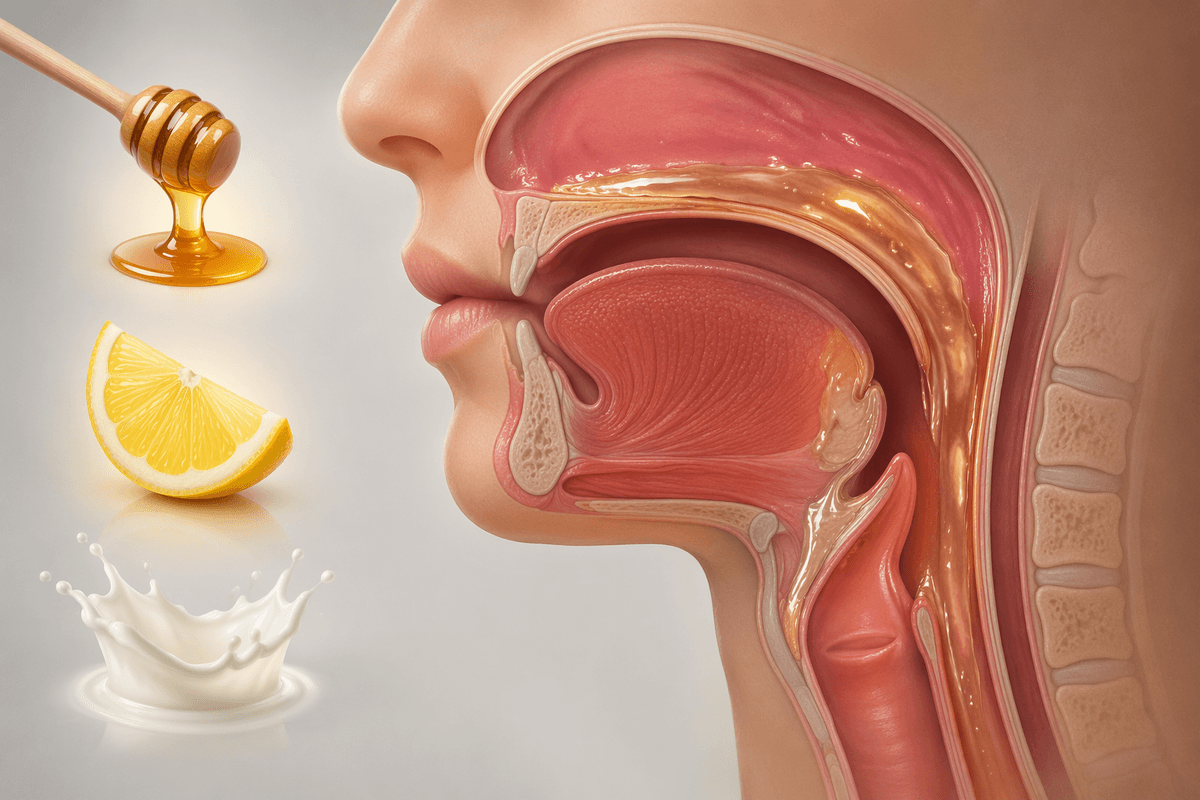
Sometimes the same ginger tea feels completely different once something gets stirred in. The sip may turn from “pointy” to smooth, or it may suddenly feel brighter and more noticeable on the sore spot, which can make it hard to tell what’s calming you and what’s just changing the sensation.
Honey often shifts the experience because it’s thick enough to coat for a moment, so the throat lining feels less exposed to air and swallowing friction. That coating can also encourage more frequent swallowing and saliva flow, which adds its own slippery layer. The relief can feel immediate, but it may fade quickly once the coating thins, which is why it can seem inconsistent from cup to cup.
Lemon tends to do the opposite for some people: the acidity can “wake up” already sensitive surface nerves and make the ginger bite feel sharper, even if the drink is warm. Milk can blunt that sharpness by diluting the pungent compounds and changing the texture, but if you’re already dealing with throat-clearing or a refluxy feeling, a heavier drink may not land the same way every time.
Different sore throats respond in different ways
On some days, the soreness feels like it’s sitting right on the surface—almost like dry skin—so anything warm and slick seems to help immediately. On other days, it feels deeper, like a tight band you notice more when you talk or try to swallow “normally,” and the same drink barely registers. That difference can be frustrating, because it makes a ginger drink seem reliable one hour and pointless the next.
Part of that comes down to what’s doing most of the irritating in the moment. A cold can leave the throat lining tender and patchy, where extra saliva and a brief coating matter a lot. Postnasal drip can keep re-wetting the area with mucus that’s mildly irritating, so relief may fade fast once you stop sipping. And if reflux is in the mix, ginger’s spice and a hot drink can feel soothing going down but leave a sharper after-feel when the already sensitive tissue stays “on alert.”
When a drink “works,” you may assume the inflammation is improving, when it may just mean the surface is temporarily less exposed. When it doesn’t work, it can feel like you chose the wrong ingredient, even though the throat may simply be responding to a different kind of irritation that day.
What “actually helps” means for throat comfort
After a few cups, the pattern usually shows itself: the throat feels easier while you’re actively sipping, then the comfort slips once your mouth dries out again. That can make it hard to trust your own read on what “helped,” because the best moments often track with timing and texture more than with any single ingredient.
In practical terms, what tends to do the most work for comfort is the change in the throat’s surface—more moisture, less friction, and a brief coating that makes swallowing feel safer. Ginger can add a distracting warmth by strongly stimulating surface nerves, but that same stimulation may backfire when the lining is raw or reflux is involved, making the soreness feel louder afterward.
So “actually helps” may simply mean it lowers irritation for the next few swallows, not that it’s speeding recovery. If the drink consistently leaves a sting or after-burn, it may be a sign your throat is asking for less bite and more gentle coverage.











![5 Best Paid Surveys for Kids and Teens [Online Surveys]](static/image/2026/05/11/1945571a-d94c-4f6c-9d81-a136672793d2.png)